Tuesday, October 25, 2016

DIY Frugal Version ~ On Guard® or Thieves® Protective Oil Blend


As the seasons change, so do the needs of the household which creates a lovely rhythm and pattern of seasonal homemaking. During the autumn and winter months, the prudent woman looks to her home apothecary. She stocks it carefully with preventative medicinals such as elixirs, syrups, herbal honeys, teas, vapor rubs, tinctures, essential oils, etc., for the cold and flu season ahead.

Now, while we love essential oils (and use them daily), they can get quite expensive, especially for larger families to keep in stock! It is nice to know that a frugal and easy alternative exists when it is necessary. For the most part, a trip to the pantry, spice rack and/or your backyard will provide all the ingredients needed for our  "Four Thieves" Protective Oil Blend. The homemaker has now become an herbalist...


The following recipe is an excerpt from our Ebook, 100+ DIY Projects to Make with Fruit Scraps. It is from the chapter "The Medicine Cabinet", which features a selection of home remedies and food supplements for your health such as medicinal and protective oil blends, salves, tonics, booster powders, immune support products, etc. This particular recipe is the thrifty counterpart to the “protective” blends sold by the essential oil companies. As this is an infused version instead of using concentrated essential oils, this blend can be applied directly (without diluting) to the body to provide healthy immune support. It can also double as a medicinal massage oil for sore muscles.


Four Thieves Protective Oil Blend

What is wonderful is that the main component is something most people throw away and we will glean from in our recipe! It is orange peel and is the first ingredient found in one of the famous essential oil blends (look behind your bottle)! The orange peel boosts immunity, detoxifies the body, is antiseptic, antimicrobial, anti-inflammatory, anxiolytic and boasts antioxidant properties amongst other things!

Ingredients (chosen for their antibacterial properties):
  • 1/4 c. dried orange peel* (instructions on how to dry orange peel is found here)
  • 3 tbsp. whole cloves
  • 2 tbsp. broken cinnamon sticks or cinnamon chips (in a pinch you can use ground cinnamon)
  • 1 tbsp. dried eucalyptus leaf (or rosemary) *
  • 1 tbsp. dried rosemary (or eucalyptus) *
  • oil (i.e., almond oil, fractionated coconut oil, grape seed oil, jojoba oil, olive or sunflower oil)
* If you do not have the rosemary or eucalyptus leaves, you can replace them with other common antibacterial herbs such as lavender or bay leaf. If you have neither, simply add in more citrus peel in its place for a frugal option. You could also use lemon peel instead of orange but the aroma won’t be as pleasing for this particular blend. Also, look outside, you may be surprised to see a eucalyptus tree nearby or rosemary and lavender plants growing!


Place all the ingredients in a coffee grinder (or blender) and process until powdery. Pour mixture into a small glass jar. Mark the outside of the jar (a black marker works great) where the mixture ends as you will want to add enough oil to cover the spices by about 1 – 1 ½ inches (since the spices will float as you add the oil, the black marker line will be a helpful guide). Add the oil and stir until you reach the appropriate volume. Cap the mixture and let this infuse for 2 - 4 weeks in a warm sunny spot (the longer it sits the stronger it will be). Shake daily for a stronger infusion.


When time has elapsed, strain product through a fine piece of cotton (or muslin) and bottle. Label and store in a cool, dark area (like the pantry).

Yield: Approx 1/ 3 cup

Shelf Life: 6 – 12 months depending on the shelf life of the oil you used. 


Product Label: Free for your personal use. Just copy, paste and print label for your homemade blend!

Feeling frugal? Store this blend inside recycled essential oil bottles, preferably one with similar qualities to further infuse the blend (i.e., a recycled orange, lemon, clove, cinnamon, eucalyptus or rosemary essential oil bottle). No need to rinse the bottle first as you want to benefit from any of the residual oil left behind! Fill up a multitude of bottles and hand them out to all the members of your family (sans the toddlers please)!


Suggested Use: Massage oil into throat, neck, back of neck and/ or to the bottom of feet during the cold and flu season (or when sickness threatens). When congested, rub liberally into the chest area. This can also be used as a massage oil for sore muscles.


If you enjoyed this frugal recipe, we share 100+ more ideas on how to creatively use up those nutrient-rich fruit scraps in our Ebook hereRecipes include balms, bath salts, perfume, scrubs, easy-to-make fancy soaps, facial products, potpourris, room sprays, sachets, candy, syrups, shrubs, desserts, healthy and delicious beverages, medicinal oil blends, salves, tonics, digestive aids, health supplements, snacks, seasoning and spice mixes, tea blends, homemade vinegars, recipes for canning syrups and jelly, herbal honey, and much more! Happy kitchen-crafting, ladies!

This post may contain affiliate links (which are merchant links that help to support this site at no additional cost to you if you purchase an item through them).

Wednesday, October 19, 2016

How We Cook From Scratch All Week With Minimal Effort


The world of meal making is always interesting to me as the keeper of the home. It is a very important part of a homemaker's day yet it certainly is one of many responsibilities we have in the home. Moving onto a homestead, I found that the time to prepare meals was threatened by the added work load of an old-fashioned farm. In order to keep the household running smoothly, I had to adopt certain measures to make cooking from scratch less time intensive. I don't do normal menu planning for a few reasons (shared here). Since I am always curious how other women do things, I thought to share our flexible and frugal system with you.


To begin, I prepare a large batch of a "foundation" food each week. The categories are usually pinto beans, quinoa, black beans, soup or whatever is harvested that week. We eat a lot of vegetarian meals and will break them up once a week or so with a nice "meaty" meal in the middle (to be explained further down)*. This is usually done on a Wednesday. Friday night is always pizza night for some extra weekend fun. On Sunday afternoon, if there is no fellowship, we enjoy potatoes and eggs as a family. If we are hosting fellowship, I prepare a large batch of soup.

* As we eat only the meat that we raise and slaughter ourselves, we try and make it stretch and appreciate every morsel! We raise chickens, sheep, goats and beef for food.


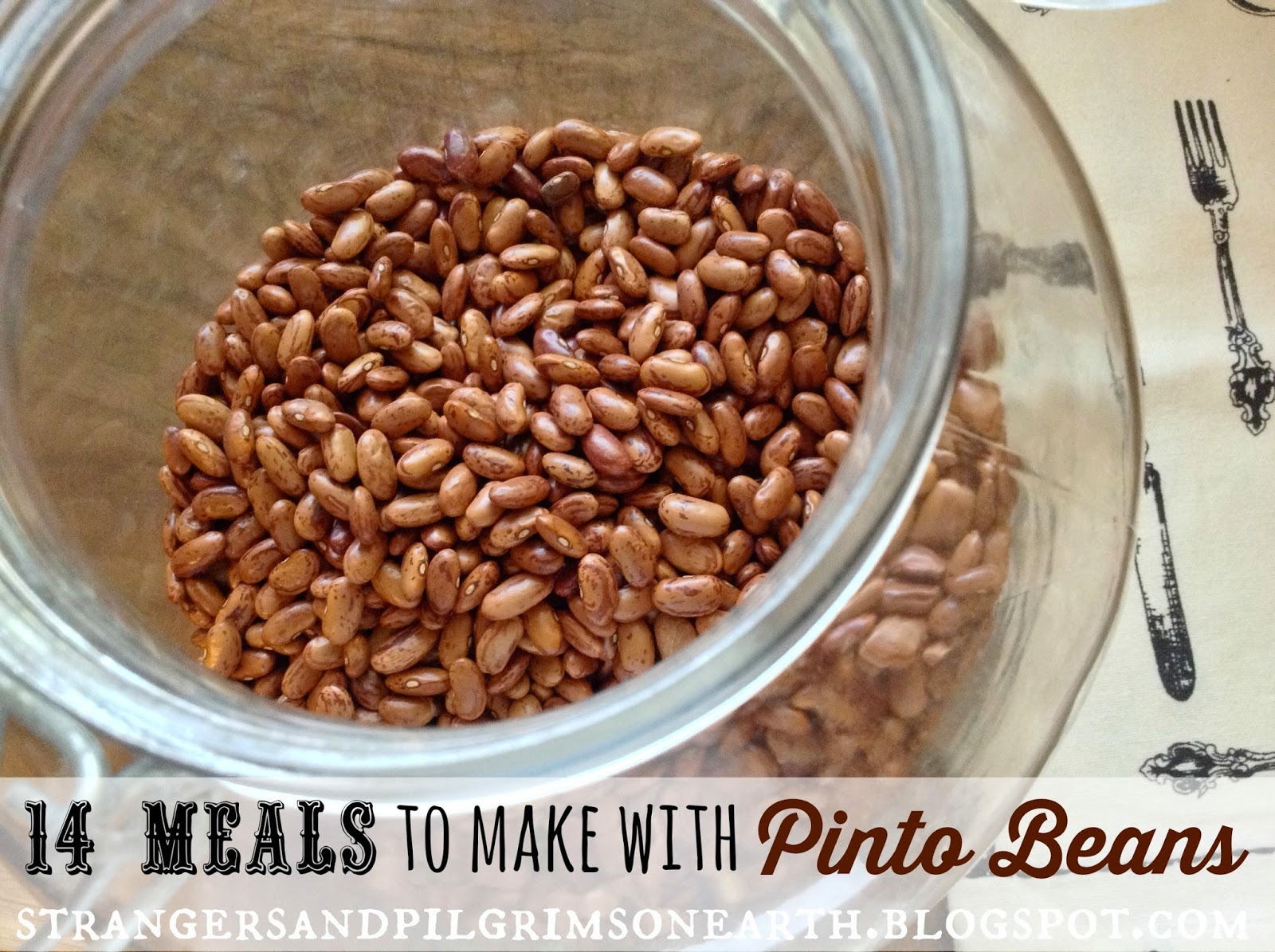
Now, back to the "foundation" food of the week. For instance, on Monday I will prepare a large batch of pinto beans. For the duration of the week, I will make meals based off of them. This would include menus like beans over rice, tostadas, chili cheese fries, eight layer bean dip, taco salad, bean burritos, etc. The "base" of the recipe is already made for me (the pinto beans) so this creates a simple system of food preparation with much flexibility during the week.

{For our pinto bean inspired menu, visit here.}


The following week, I will prepare a large batch of soup (though in the summer it would be large seasonal salads). What is wonderful about our recipe is that it works with whatever we have growing at the time. Flexibility is key when you live on a farm. To change up the daily meals with this soup, I will serve different side dishes to go with it. One day it will be hard boiled eggs and marinated vegetables, another day I will serve the soup with grilled cheese sandwiches while angeled eggs and a green salad would be another variation.

{For our "End of the Garden Soup" recipe, visit here.}


The third week rotation will bring us back to beans. But this time, I will prepare a large batch of black beans (see this post here). Some menu ideas will include black bean quesadillas, black bean salad, taco soup with cornbread, black bean burgers and taco casserole (to name a few).

{For our black bean inspired menu, visit here.}


Quinoa is rather new to our weekly rotation and I have yet to write a post on our favorite collection of recipes (but it is coming). However, for the sake of this article, I will include a few. My sister-in-law got us hooked on these quinoa patties. Served with ranch, they are out of this world and so flavorful (this is a great "get your feet wet" with quinoa recipe)! We also make a delicious quinoa casserole and a tasty cold quinoa salad. When we have had our fill of it, this decadent chocolate cake will use the excess and it is amazing (and freezes well in cupcake form)! You wouldn't know that it was a gluten-free and a quinoa-based cake! (And let me say, that says a lot around here!)


Our weekly rotation will often include the "famous" food of the week that is getting harvested like crazy in our garden. For instance, during the summer, there is zucchini season! We will make zucchini patties, quiche, stir fry, grilled zucchini, zucchini sauce for pasta, etc. You will find our zucchini meal making inspiration here. During the winter it might be using up our butternut squash surplus (some ideas are here). I think you get the idea! Whatever is growing in abundance becomes our meal focus!


Regarding the in-between "insert" meals"
  • On Wednesday nights, it is usually an old stand-by like tacos or some sort of "meat" meal featuring chicken, lamb or beef. Tacos don't require much planning (and tortilla shells freeze well) and I could usually come up with seasonal toppings depending on what is growing. For instance, it is either lettuce, spinach or cabbage that will get sprinkled on top depending on the garden. In the summer we have fresh tomatoes while in the colder months I will serve canned salsa with them. Shredded cheese is always in the freezer as we buy in bulk and bag it up in smaller amounts. Thus, tacos is an easy impromptu meal to keep the menu different.
  • When we prepare meat, we often make a large amount at once. For instance, my hubby will debone a batch of chickens, I will marinate them and he will grill them (as we sip some coffee together). Then, I bag them up in smaller amounts and freeze the excess. This way we can conveniently make chicken soft tacos, chicken sandwiches, chicken with grilled vegetables and so forth. 
  • Eggs are also an excellent standby as we always have dozens to work with. We make egg casseroles, angeled eggs, hash browns and eggs, popovers, quiches, etc. When in doubt, we usually serve eggs!
  • Friday night is always pizza night so there is not much planning to be done there. I usually make a large batch of dough, divide it and freeze the excess in bags for future Friday meals to make it easy.
  • If we are planning on having company on a weekend, my hubby will take the time to BBQ some meat (and add some seasonal veggies to the grill) and I will usually come up with some other garden goodies to go with it which makes it very easy. 

An alternative to this plan would be to create a large batch of pinto beans, black beans, quinoa and/or soup, etc., (choose one to do each week) and freeze them into smaller family-sized portions. This will give you a variety of part-made meals during the course of the month that can be prepared conveniently. Some husbands may prefer this. My husband isn't picky in this area as long as I vary the recipes. As his goal is for his garden to feed us, I find him quite flexible :)

Recap:

Monday ~ "foundation food of the week" meal (i.e., pinto beans, black beans, quinoa, soup, etc.)
Tuesday ~ "foundation food of the week" meal
Wednesday ~ "insert meat meal" such as tacos or something else with meat on the menu
Thursday ~ "foundation food of the week" meal
Friday ~ "pizza night" (we usually have prepared dough in the freezer for convenience)
Saturday ~ finish up the fridge "leftovers" or BBQ meat if having company
Sunday ~ "eggs and potatoes" if just our family, or Sabbath Soup if hosting a fellowship


This is just a basic idea of how we eat. Obviously, things change, cravings happen and so forth. This is simply a way to cook that keeps everything somewhat frugal, flexible and easy. Do you have some sort of meal making system? I would love to hear it!
All the fine print. This post may be shared with some or all of the following link-ups: The Art of Home-Making MondaysModest Mom Monday'sMonday's MusingsMake Your Home Sing MondayGood Morning Mondays,  The ScoopTitus 2 TuesdaysTuesdays with a TwistRaising HomemakersThe Homesteader HopWise Woman Link UpHomestead Blog Hop Wow Us Wednesdays,  Coffee and ConversationHomemaking ThursdaysHome Sweet HomeOur Simple HomesteadAwesome Life Friday Link UpFive Star Frou Frou Friday, and Shabbilicious Friday. Thank you lovely ladies for hosting these. This post may contain affiliate links (which are merchant links that help to support this site at no additional cost to you if you purchase an item through them).

Wednesday, October 12, 2016

{Healthy} Honey Sweetened Pumpkin Cake Recipe


This healthy, hearty and easy-to-make cake can be more than dessert. It may be served as a nutritious, afternoon snack with a cold glass of raw milk (Mmm...)! You could even prepare it the night before for a fun and festive fall breakfast as there are no scary ingredients in here! 


List of Ingredients:
  • 2 eggs
  • 1 c. pumpkin puree (Butternut squash would work just as well!)
  • ¾ c. honey
  • 1/2 c. oil
  • 1/2 tsp. salt
  • 1 tsp. baking soda
  • 2 tsp. baking powder
  • 1 tsp. cinnamon
  • 1 tsp. pumpkin pie seasoning
  • 2/3 c. water
  • 1 1/2 c. whole wheat flour

Beat eggs in a bowl. Add the remaining ingredients, except the last two. Beat well. Add the water and flour, beating to a fluffy texture. Pour into a greased 13 by 9 inch pan. Bake at 350 degrees for 20 - 30 minutes, until golden and/or cake springs back when touched. Frost cake with 16 ounces cream cheese blended with maple syrup to taste (or until it is spreadable).


This recipe is slightly adapted from one shared by Miriam Wengerd in the Keepers at Home Magazine (Vol. 10, Issue 4, Winter 2002). I replaced her listed spices for a "quick" teaspoon of pumpkin pie seasoning in my version shared above. You will find the printable recipe HERE.


For more pumpkin related posts, visit the following:
All the fine print. This post may be shared with some or all of the following link-ups: The Art of Home-Making MondaysModest Mom Monday'sMonday's MusingsMake Your Home Sing MondayGood Morning Mondays,  The ScoopTitus 2 TuesdaysTuesdays with a TwistRaising HomemakersThe Homesteader HopWise Woman Link UpHomestead Blog Hop Wow Us Wednesdays,  Coffee and ConversationHomemaking ThursdaysHome Sweet HomeOur Simple HomesteadAwesome Life Friday Link UpFive Star Frou Frou Friday, and Shabbilicious Friday. Thank you lovely ladies for hosting these. This post may contain affiliate links (which are merchant links that help to support this site at no additional cost to you if you purchase an item through them).


Tuesday, October 4, 2016

DIY Apple Cinnamon Syrup {From Fruit Peels & Cores!}


"During the late summer when Mother dried apples for her winter cooking the children were always on hand to help with the paring and to speak for the long curls of peeling and the cores. Each child received his or her core, carefully gnawed off all of the good part, and then counted up the seeds. The lucky one who had the most seeds at the end of the day was entitled to a whole apple of his own. There were other things to do with the apple seeds and peelings, too..."
~ Carol Ryrie Brink, Magical Melons


The following recipe is an excerpt from our Ebook, 100+ DIY Projects to Make with Fruit Scraps. It is from the chapter "The Kitchen Table", which features a selection of products and foodstuffs to broaden your menus frugally. When making apple pies, sauces and cakes, you are left with a mound of peels and cores. With this recipe, you can now prepare something special for pennies for your family! Pour this fruit flavored syrup over pancakes, waffles, French toast, yogurt and ice-cream. Though it does have sugar, it is a healthier alternative to the high-fructose-corn-syrup versions they sell in the market. 


Ingredients:
  • apple peels and/ or cores
  • cinnamon (1/8 tsp. per cup of measured liquid)
  • sugar
  • water
  • fresh or bottled lemon juice or home-canned (1 tsp. per cup of measured liquid)
Place apple peels and cores in a sauce pan. Add enough water to cover the scraps and bring mixture to a boil. Reduce heat and simmer for 20 - 25 minutes (or until fruit pieces are mushy). Strain mixture (discard the fruit scraps) and measure out the remaining liquid (it is easier if you strain the syrup directly into a large glass heatproof measuring cup). Return strained liquid to sauce pan and add half the amount of sugar as there is liquid (for instance, if you have 4 cups of liquid, add 2 cups of sugar). Add the lemon juice (1 tsp. per cup of measured liquid) and cinnamon (1/8 tsp. per cup of measured liquid). Bring liquid back to a boil and continue to boil until syrup reaches desired consistency (or until a candy thermometer reaches approximately 218 degrees Fahrenheit--do not go over this temperature). Once the syrup has cooled, pour into a clean glass jar or bottle and store in the refrigerator.


Shelf Life: Approx. 2 - 3 months

Suggested Use: Use like you would any pancake syrup (pour over pancakes, waffles, French toast, yogurt and ice-cream).


If you enjoyed this recipe, we share 100+ more ideas on how to use up fruit scraps in our Ebook here! Happy kitchen-crafting, ladies!
All the fine print. This post may be shared with some or all of the following link-ups: The Art of Home-Making MondaysModest Mom Monday'sMonday's MusingsMake Your Home Sing MondayGood Morning Mondays,  The ScoopTitus 2 TuesdaysTuesdays with a TwistRaising HomemakersThe Homesteader HopWise Woman Link UpHomestead Blog Hop Wow Us Wednesdays,  Coffee and ConversationHomemaking ThursdaysHome Sweet HomeOur Simple HomesteadAwesome Life Friday Link UpFive Star Frou Frou Friday, and Shabbilicious Friday. Thank you lovely ladies for hosting these. This post may contain affiliate links (which are merchant links that help to support this site at no additional cost to you if you purchase an item through them).