Showing posts with label Recipe Box. Show all posts

Thursday, January 5, 2023

Preserving Orange Gem Jelly, Discards and Delighting in the Light

"A man ought to carry himself in the world as an orange tree would if it could walk up and down in the garden, swinging perfume from every little censer it holds up to the air."
~ Henry Ward Beecher

I love to work with citrus in the winter. Not only is it tasty and refreshing and full of the necessary vitamin C, but bright and beautiful in the somber chilly background of the season. Preserving food in jars is also very welcoming in this weather as the warmth canning brings into the kitchen is much appreciated. Plus, adding extra jars to the pantry shelf is indeed lovely too. Would you care to join me in preserving some delicious orange gem jelly? As the name suggests, it is reminiscent of those "Sunkist" sugared orange gem candies I loved as a child. Plus, it is quite simple to make.


Ingredients: 
  • 2 c. freshly squeezed, strained orange juice (from approx. 5-6 oranges) 
  • 1/3 c. freshly squeezed, strained lemon juice (from approx. 2 lemons) 
  • 2/3 c. water 
  • 6 tbsp. pectin (I buy it in bulk HERE or 1 box of Sure Jell)
  • long strip of orange peel (from oranges used above) 
  • 3 c. sugar (I use organic from Costco)

Directions:

Place the strained orange juice, lemon juice and water in a large cooking pot. Drop in the orange peel. Stir in the pectin until dissolved and bring to a boil (stirring frequently). Once liquid reaches a rolling boil that cannot be stirred down, then add in the sugar and bring to another rolling boil (stirring frequently). Once liquid reaches another rolling boil, let it boil for one minute longer while stirring constantly so it doesn’t overflow. Remove from heat. Using tongs, remove strip of orange peel and discard. Skim off any foam quickly and ladle jelly into hot, sterilized half-pint (or quarter-pint) jars leaving 1/4-inch headspace. Wipe rim of jars with a dampened clean towel; adjust two-piece metal canning lids. Process for 5 minutes in a boiling water canner. Remove jars and cool (out of the way of any drafts) on a kitchen towel once processing time is complete. 


Wait for 12 hours and then you may store your lovely jelly in the pantry.

Yield: 4 half-pint jars (or 8 1/4-pint jars)

Note: This recipe has been adapted from the “National Center for Food Preservation” website.


You will find the printable version of this recipe HERE should you like to add it to your "Preserving Notebook"


Though I was gifted one small basket of homegrown oranges, I was able to preserve so much from them! 

This was all produced for our home from the free basket of organic, homegrown oranges (last year). I thought it would be fun to include ways you can use up every last bit of this refreshing citrus fruit (no discards here!):

- 8 quarter-pint jars of orange gem jelly (recipe shared HERE)

- 8 half-pint jars of macerated marmalade (this was an experiment and a failure at that so I'm definitely not going to share this recipe!)


- 3 dehydrator trays dried zest (which I removed from the oranges before making the jelly - for medicinals, cooking, baking, DIY products, etc.)

- 1 dehydrator tray dried orange slices (to be used in tea blends, infusing large jars of sun tea, potpourri, garnish and my newest idea of placing under roasting poultry to impart flavor)


- a few quart jars of orange peel vinegar for making cleaning products.

- jar of orange peel ends for the freezer (when I save enough I will make pectin with them) The ends can also be used to make many other things - visit my ebook for 100+ ways to use fruit scraps for more ideas.


- 3 orange roses (for fun! - to embellish orange cakes, etc.) (The tutorial is also shared in my ebook - 100+ ways to use fruit scraps.)

And finally, you get to place all your resourceful homemade items on your pantry shelf just like Ma Ingalls would have done! 


“The sunshine came streaming through the windows into the house, and everything was so neat and pretty. The table was covered with a red cloth, and the cookstove was polished shining black. Through the bedroom door Laura could see the trundle bed in its place under the big bed. The pantry door stood wide open, giving the sight and smell of goodies on the shelves, and Black Susan came purring down the stairs from the attic, where she had been taking a nap."
~ Laura Ingalls Wilder, Little House in the Big Woods

I think the joy one gets from reading these pioneering classics is the ability to see the beauty in the ordinary. While the darkness seems to be looming in so many areas of life, these books (and Scripture - read Phil 4:8) remind us to glorify in the basic but beautiful blessings.  To enjoy the heavenly gifts...

Sunshine, the chirping of the birds, the early luscious spring growth and the aroma of wet earth, the cozy kitchen with the curtains flowing in the breeze, the smell of a newborn child, the smile from a toddler, the embrace from a child, the laughter shared with a teen, the steadfastness of a husband’s love, the eternal promises from Above.

Dearest reader, though it is winter, let us remember to delight in the Light.

“Then Jesus spoke to them again, saying,
"I am the light of the world.
He who follows Me shall not walk in darkness,
but have the light of life."
~ John 8:12

I hope you enjoyed today's winter preservation post with a touch of simple pioneer nostalgia. It is raining this morning and the sound of the pitter-patter is so gentle and soothing. I'm looking forward to beginning my nesting for the day. Happy homemaking! Love, JES

Friday, November 18, 2022

Love Languages in the Home, DIY Pumpkin Pie Spice and Desserts


“Of all the music that reached farthest into heaven,
it is the beating of a loving heart."
~ Henry Ward Beecher

Love languages in the home…

- freshly baked desserts

- coziness (throw blankets!)

- a welcoming smile

- freshly picked flowers or greenery

- diffusers running

- tidiness

- a gentle squeeze

- meals together

- candlelight

- folded laundry piles

- pie (savory and sweet)

- a bedtime story

- prayers

- hugs

- encouragement

- your undivided attention 📵

“Let all that you do be done with love.”
~ 1 Corinthians 16:14


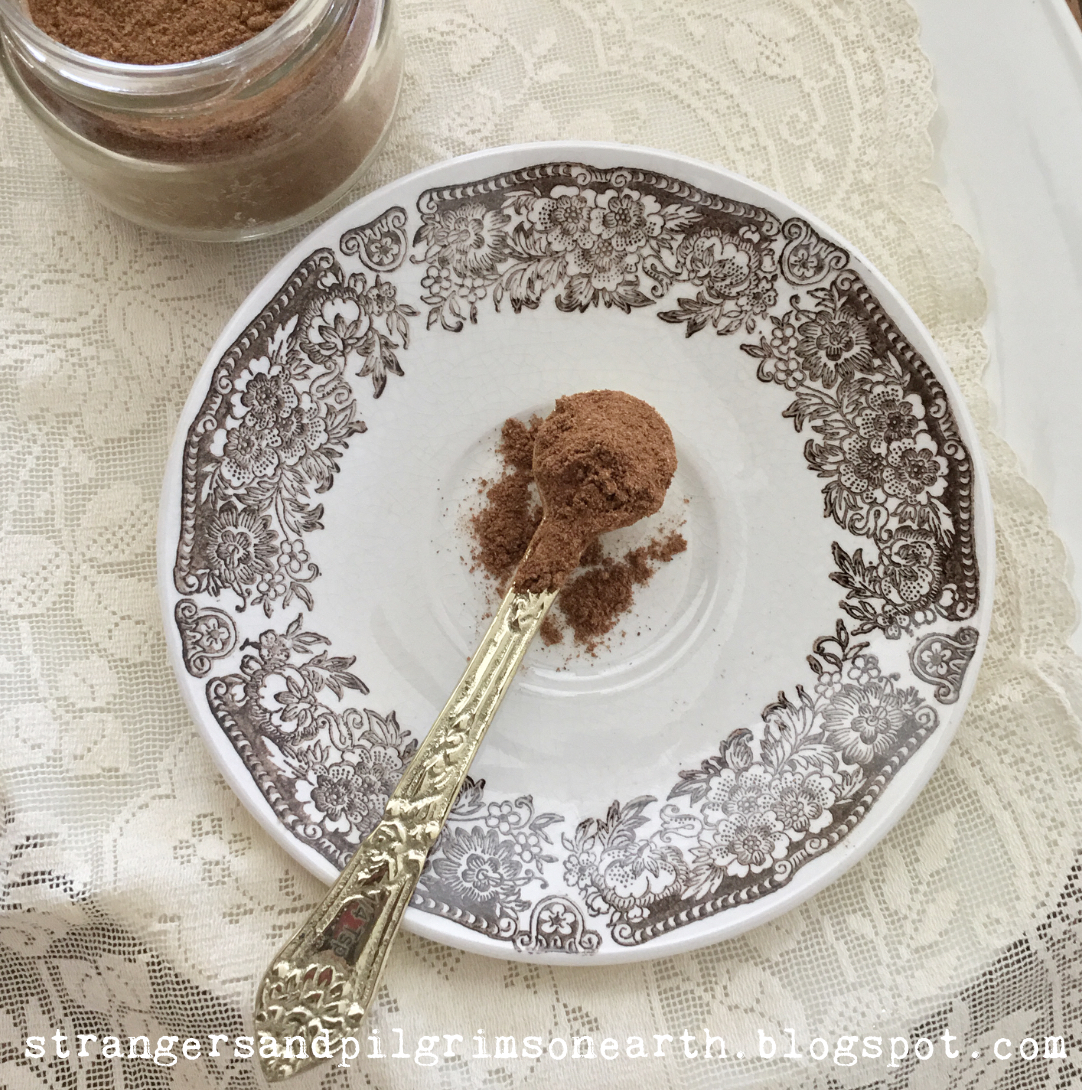
Pumpkin pie is my husband's love language or pumpkin desserts in general! And to have a nice supply of pumpkin pie spice makes baking day a bit more smoother. If a pumpkin related recipe calls for a bit of ginger, a bit of cinnamon and/or a bit of cloves, etc., I simply add up all the ingredient amounts and conveniently use that total in "pumpkin pie spice". It takes less time for me to individually measure out each one and less time to dig up the individual spices in the cabinet.  


Pumpkin Pie Spice Recipe:

— 1/2 c. cinnamon

— 1/4 c. ground ginger

— 2 tbsp. nutmeg

— 2 tbsp. ground cloves

Stir ingredients together until combined.

Yield: approx. 1 cup

For the printable recipe, please visit HERE.


And dessert doesn’t have to be unhealthy. This clean eating recipe is from The Transformed Wife and uses maple syrup (or honey) as a sweetener and coconut milk for creaminess. My husband absolutely loved it. She shares her recipe HERE if you’re interested. The nicest thing is that it is so easy to make! All the ingredients go into the blender and then poured into the pie shell. 

Note: She has since shared an alternative to the recipe which includes these changes which I made: I used maple syrup in lieu of honey, used only 1/2 c. of coconut milk (per a change she made when using maple syrup) and I added 1 tsp. vanilla. I also used 1 1/2 rounded teaspoons of pumpkin pie spice in lieu of the spices shared. 

I’ll also point out that I’m not the best at making “beautiful” Pinterest-perfect pies but I continue to post pictures of them because my family thinks they’re wonderful ☺️. We are often our own worst critics and yet, when we do these kinds of things in our home (“flaws” and all for our family), they are so grateful! They don’t require perfection from us, just simple acts of love or simply love in general.


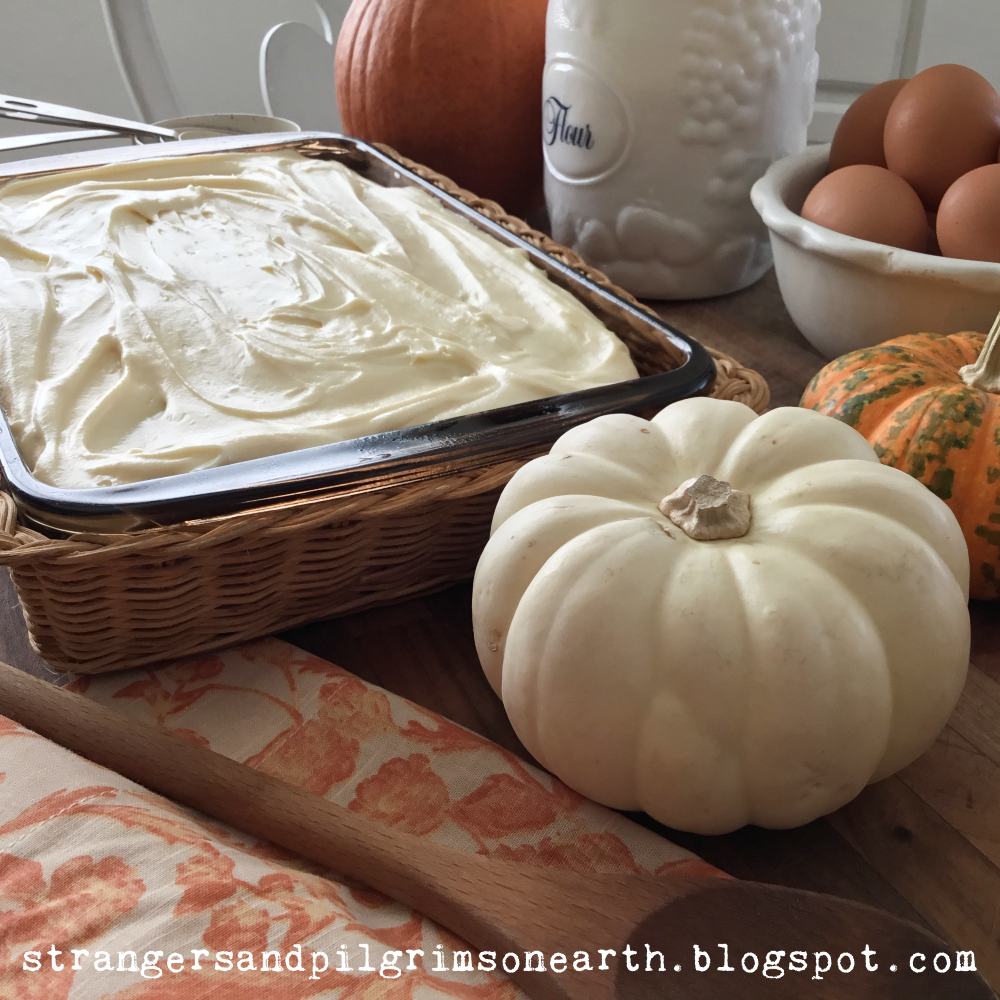
Here is another healthy pumpkin recipe for pumpkin cake which I shared long ago. It uses honey as a sweetener and whole wheat flour. It is nice and moist and with your favorite cream cheese frosting, everyone will love it! You will find the printable recipe HERE.


Lastly, in the event that you have no fresh eggs, milk and/or butter (or are trying to economize), you can still make a delicious and moist cake thanks to our Depression Era ancestors who came up with the crazy cakes. It is also dairy free for those who have allergies. This cake is easy to make, doesn't make a mess and is surprisingly good! You will find the recipe HERE.

You can use pumpkin or butternut squash or any other orange-fleshed gourd in any of these recipes. But one thing is necessary, your homemade pumpkin pie spice! 😉


It may seem simple (though sometimes it can be "oh-so-hard"), but it is a beautiful life, full of love and for that,  I am grateful.

"Thank God, O women for the quietude of your home, and that you are queen in it. Men come at eventide to the home; but all day long you are there, beautifying it, sanctifying it, adorning it, blessing it. Better be there than wear a queen's coronet. Better be there than carry the purse of a princess. It may be a very humble home. There may be no carpet on the floor. There may be no pictures on the wall. There may be no silks in the wardrobe; but, by your faith in God, and your cheerful demeanor, you may garniture that place with more splendor than the upholsterer's hand ever kindled."
~ T. DeWitt Talmage


Happy autumn homemaking,
♡ JES
P.S. I got behind once again in my newsletters, I am wondering if they are still worth publishing? Would you rather have a long post or none at all? I know time is valuable for everyone and I am not sure this blog is useful anymore with all the information that has already been posted all over the internet. It feels like there is nothing new under the sun as Solomon says.... I do appreciate your feedback. ♡ JES

Friday, September 16, 2022

How to Make a "Homespun" Preserving Notebook

“There was no rest and no play for anyone now. They all worked from candle-light to candle-light. Mother and the girls were making cucumber pickles, green tomato pickles, and watermelon rind pickles; they were drying corn and apples, and making preserves. Everything must be saved, nothing wasted of all the summer’s bounty.”
~ Laura Ingalls Wilder, Farmer Boy

I used to keep my canning recipes in my recipe book but the more recipes I accumulated, the less space I had for the seasonal canning ones. Then I switched them to my herbal but that also grew in size. This summer, I began gathering all my canning notes, recipes, etc., and placing them in their own dedicated binder. I call it my "Preserving Notebook".

After much deliberation (yes I think hard on such things 🤓), I decided to use alphabet tabs (affiliate link) to organize everything. That way, any canning recipe would have a home alphabetically. Apple recipes would go under “A”, blueberry recipes under "B", strawberry recipes under “S” and so forth. I also inserted a few other things that are useful to my preserving needs.

Here is what I included in my notebook:

(These first few items I keep in the beginning of the binder, prior to the tabs since they don't fit a certain "produce" theme. I consider them informational.)

- my food preservation planner pages (free printable here) In the autumn and winter months, as I go through my canning books, I make note on the recipes I would like to try. I input the recipe, book and page number in my planner pages. That way, when the season hits, I already know what I want to make with a certain fruit or vegetable. It is very useful. 

- pressure canning instructions (I don’t do it enough to rely on my memory so these steps are helpful and always conveniently located) I keep these at the front of the index tabs and have it covered in plastic as I take these in and out more. I copied these directions from The Prairie Homestead where she gives a great in-depth tutorial on how to use a pressure canner. Here is the link in case you are interested.

- pressure canning vegetable and meat charts (with time and pressure amounts) These I photocopied from the pressure canner manual (not shown).

- preserving articles I read from the canning authorities and find useful (such as “how to can without sugar or salt”, etc.) Here is the link in case you are interested in this particular one.


(The remaining items I insert in the tabbed section according to the alphabetical order of the produce I am preserving.)

- photocopies of my favorite recipes from my canning books (this way I don’t have to search them out), any handwritten recipes and so forth. Of course, these are placed alphabetically by "produce".

- themed recipe articles from State extension offices (they’ll have printable pages on how to preserve foraged fruits, etc., and list various preserving ideas and recipes which are very handy - here is a sample of the foraged fruit and here is the how to preserve peppers booklet that I included as well)

- individual preserving recipes I print from websites (once again these are placed in alphabetical order according to what is being preserved) Here is the apple pie filling recipe I use. I did do some fall decorating on the page as it was a little bland :)

- fruit leather recipe (here is the one I printed out from Chocolate Box Cottage) Something like this I would file under "F" for "fruit" in general.

- any food preservation recipes in general (including freezer jam recipes, fermenting recipes, dehydrating, etc.) Here are a few from my blog which may be printed for your notebook:

(All my food preservation tutorials are shared HERE but all do not include printable recipes.)

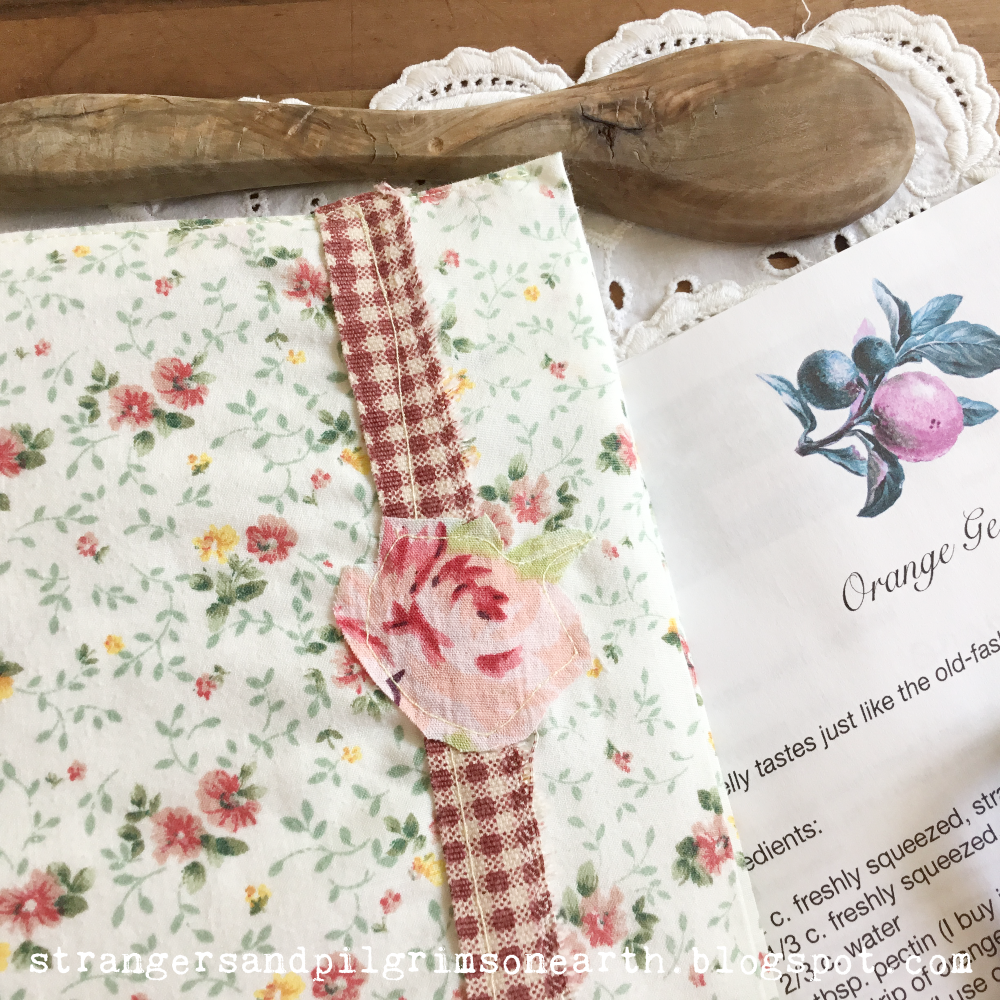
To add interest, I covered my notebook with a floral fabric to give it a cozy feeling. I am quite embarrassed to show this up close as I am not a great seamstress and quite an impatient one. I just used the remnant fabric from an old sheet (which had lots of piling but was still a cute print). I used the remnant gingham border from another project as ribbon (it still had a frayed side but I thought it added to the charm). Next, I cut off a rose from a retired duster-housedress and used that as a little embellishment. I also added a strip of lace to the back cover for more interest (pictured below).  I made the cover in the same way we used to have to cover our school books but used fabric instead of a paper bag. And I used a sewing machine instead of tape. It took 10 minutes to make because I obviously did it quickly (to be honest, I was supposed to be doing something else that day and I was feeling quite guilty for making this!).

I’ll be fine-tuning my binder over autumn as our garden has faded and I’ll have extra time to work on such projects. In fact, as I was typing this up, I thought I would add a food dehydration chart to this. I am always looking up the degrees and length of time for each piece of produce and it would be nice to have it handy here.

This project cost me a total of $3.76 because I had to purchase the alphabet tabs. Everything else was used from foraged materials around the house. This is a great way to use an old, ugly binder since you can cover it. Do you think you would ever make something like this? How do you store and keep track of your food preservation recipes? Is there anything else you would place in this binder? Please share!

Happy homemaking,

♡ JES


Monday, September 12, 2022

Lavender Laundry Soap ~ Herbal Homemaking ~ Printable Recipe


"'Aye!' said Mrs. Purkis, smoothing down the bed,
and despatching Jenny for an armful of lavender-scented towels..."
~ Elizabeth Gaskell, North and South

It is okay to enjoy your life at home. It is okay to collect large, old jars because you think they’re pretty. It’s okay to decide to fill those jars with homemade sundries to add loveliness to your routine. It’s okay to want to beautify the ordinary to make it extraordinary. It’s okay to pour love, creativity and joy into your tasks. It’s okay to pour your heart into all areas of your home. 

You have permission to ignore everyone who tells you housework is mundane. It’s okay to make homemaking fun! As Mark Twain put it, “Find a job you enjoy doing, and you will never have to work a day in your life.”

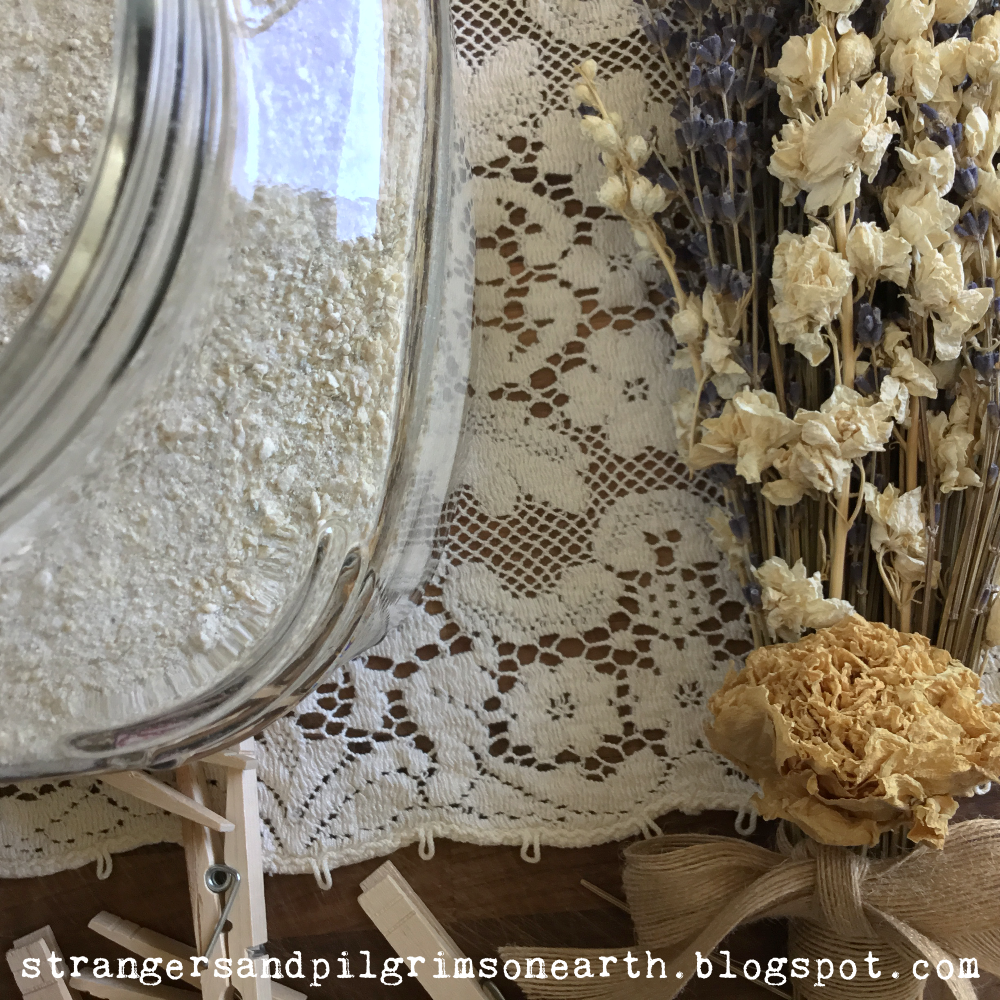
Lavender Laundry Soap (a perfect recipe of loveliness): 

-- 1 c. grated bar soap *

-- 1 c. borax (found in laundry isle at Walmart)

-- 1 c. washing soda (found in laundry isle at Walmart)

-- 1/4 c. lavender buds

Optional: 10 drops lemon essential oil or your favorite (I use lemon as it is cleansing and the least expensive of all the oils!)

Pulverize ingredients in a blender or food processor until powdery.

* I used a plain coconut oil soap (which I found on my travels - it has no extra oils or fats in it and is therefore better suited for laundry) but you can also use Dr. Bronner’s bar soap and/or Kirk’s Castile Soap if you desire something natural. Calico and Twine sells a lovely laundry soap in her shop (which is also natural and made with coconut oil). I know many people use Fels Naphtha soap, Zote soap or even plain Ivory bar soap.

There are a myriad of recipes online you can experiment with. I’m sharing a basic recipe but with the addition of dried lavender to make it special. I have extra in my apothecary that I want to use up before it loses its potency. As lavender means “to wash”, what better herb to enjoy for our laundry?

Use 1 tbsp. for regular loads, 2 for larger loads. As it is low in suds, this recipe should be fine for HE machines. Just make sure all the lavender is pulverized!


You will find the printable recipe with labels HERE (my dear, sweet homemaking friend).

(Some of the links in this post are affiliate links which help support this blog. Thank you!)


Happily homemaking,
♡ JES

Thursday, June 23, 2022

How to Make Simple Strawberry Freezer Jam ~ Printable Recipe

One of the first things I learned how to preserve as a newlywed was strawberry freezer jam. It doesn't require any fancy equipment or any complicated skill but it surely blessed the whole family every time I served buttery toast, pancakes, waffles or crepes. And yes, it is also amazing over ice cream or plain cheesecake in case you were wondering. While I have since learned to can my own jams, I still make a few batches of strawberry freezer jam each year because the fresh flavor of this raw jam is insurmountable.

There are two ways to make it! You can either buy the specialized  "freezer jam pectin" in the store which are quite pricey or you can make your own with regular pectin. Being I purchase my pectin in bulk, this is the more affordable route and the one I am sharing today.

Ingredients:

  • 2 cups crushed strawberries
  • 2 cups sugar
  • 2 tbsp. bottled lemon juice (you can most likely use freshly squeezed juice as well)
  • 1 cup cold water

To begin, clean strawberries and crush them. You can use any method you like. You can put them in the food processor, the blender or you can smash them in a shallow pan the old fashioned way. I have tried all the various ways depending on my time constraints and I did find that the old fashioned way does yield a bit more of a desirable consistency. However, the difference isn't too much that I wouldn't still do the other quicker options. It really depends on my mood at the moment and what I have going on.

This recipe can be halved but not necessarily doubled. Please keep in mind that freezer jam is best done in small batches for best results. 

So, for every 2 cups of crushed strawberries, add 2 cups of sugar and 2 tablespoons of lemon juice. 

Let it stand for 20 - 30 minutes to draw out the juices. 

Next, put one package of powdered fruit pectin (or 6 tbsp. bulk pectin) in a small saucepan with one cup of cold water and stir to dissolve. Continue to stir to blend in the pectin while bringing the mixture to a boil. Once it hits a rolling boil, boil for exactly one minute.

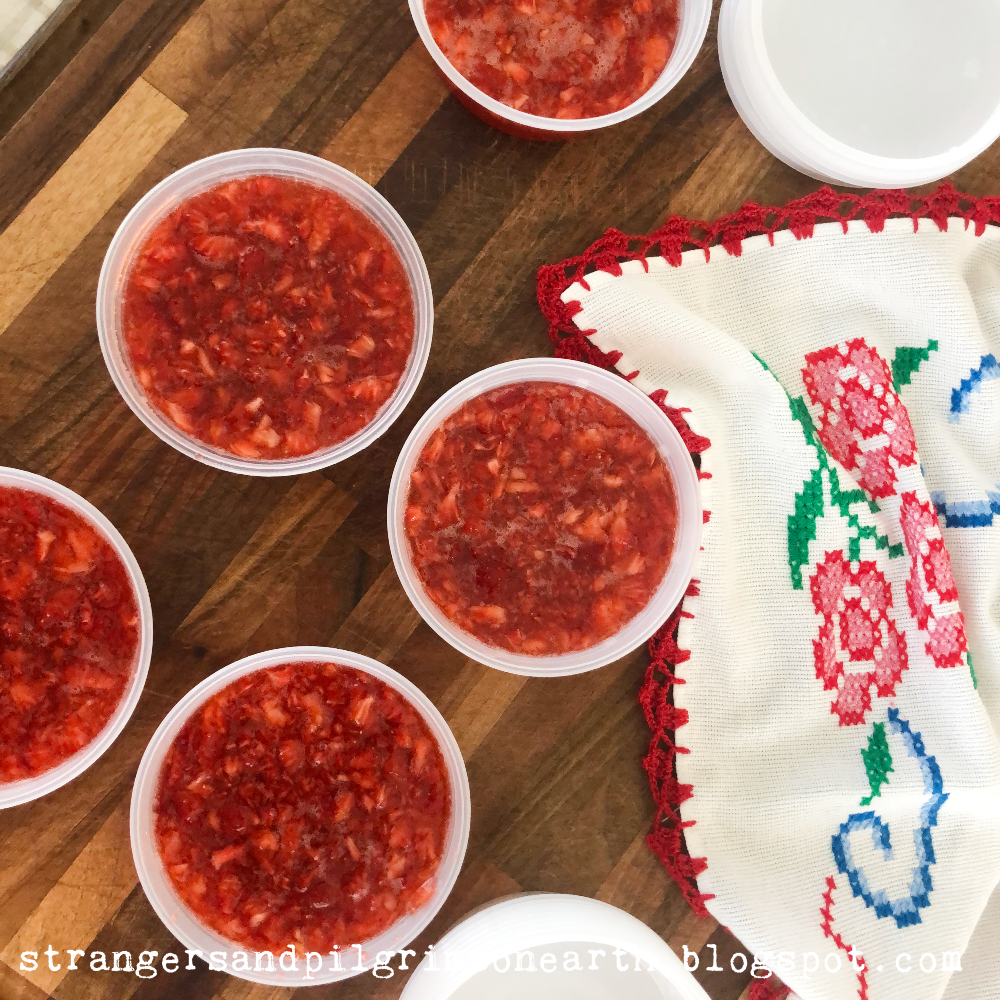
Pour the pectin mixture into the fruit and stir thoroughly for 2 minutes. Ladle into clean containers (I used these -- affiliate link) and let stand for 30 minutes. This recipe should yield approx. 5 half-pints and/or 5 cups. 

Label and date your delicious jam!

Once that is accomplished, I like to place the jam in the refrigerator for 24 hours to set prior to freezing. 

You can store some in the refrigerator to use directly and/or place the remaining in the freezer for future enjoyment. For best results, use within a year.

Note: these floral, freezer-friendly labels are found HERE in my Etsy Shop!

While freezer jam doesn't have the same thick consistency as cooked jam, the nice syrupy consistency is most welcome on those delicious foods described above. This is a summer staple in our home and a seasonal part of my homemaking routine. I must make strawberry freezer jam each June!

You will find the printable recipe HERE ♥️

You may also be interested in visiting our other strawberry patch of posts for more strawberry ideas!

Happy homemaking,
♡ JES