Showing posts with label Pantry: Prepare Your Own Series. Show all posts

Thursday, January 5, 2023

Preserving Orange Gem Jelly, Discards and Delighting in the Light

"A man ought to carry himself in the world as an orange tree would if it could walk up and down in the garden, swinging perfume from every little censer it holds up to the air."
~ Henry Ward Beecher

I love to work with citrus in the winter. Not only is it tasty and refreshing and full of the necessary vitamin C, but bright and beautiful in the somber chilly background of the season. Preserving food in jars is also very welcoming in this weather as the warmth canning brings into the kitchen is much appreciated. Plus, adding extra jars to the pantry shelf is indeed lovely too. Would you care to join me in preserving some delicious orange gem jelly? As the name suggests, it is reminiscent of those "Sunkist" sugared orange gem candies I loved as a child. Plus, it is quite simple to make.


Ingredients: 
  • 2 c. freshly squeezed, strained orange juice (from approx. 5-6 oranges) 
  • 1/3 c. freshly squeezed, strained lemon juice (from approx. 2 lemons) 
  • 2/3 c. water 
  • 6 tbsp. pectin (I buy it in bulk HERE or 1 box of Sure Jell)
  • long strip of orange peel (from oranges used above) 
  • 3 c. sugar (I use organic from Costco)

Directions:

Place the strained orange juice, lemon juice and water in a large cooking pot. Drop in the orange peel. Stir in the pectin until dissolved and bring to a boil (stirring frequently). Once liquid reaches a rolling boil that cannot be stirred down, then add in the sugar and bring to another rolling boil (stirring frequently). Once liquid reaches another rolling boil, let it boil for one minute longer while stirring constantly so it doesn’t overflow. Remove from heat. Using tongs, remove strip of orange peel and discard. Skim off any foam quickly and ladle jelly into hot, sterilized half-pint (or quarter-pint) jars leaving 1/4-inch headspace. Wipe rim of jars with a dampened clean towel; adjust two-piece metal canning lids. Process for 5 minutes in a boiling water canner. Remove jars and cool (out of the way of any drafts) on a kitchen towel once processing time is complete. 


Wait for 12 hours and then you may store your lovely jelly in the pantry.

Yield: 4 half-pint jars (or 8 1/4-pint jars)

Note: This recipe has been adapted from the “National Center for Food Preservation” website.


You will find the printable version of this recipe HERE should you like to add it to your "Preserving Notebook"


Though I was gifted one small basket of homegrown oranges, I was able to preserve so much from them! 

This was all produced for our home from the free basket of organic, homegrown oranges (last year). I thought it would be fun to include ways you can use up every last bit of this refreshing citrus fruit (no discards here!):

- 8 quarter-pint jars of orange gem jelly (recipe shared HERE)

- 8 half-pint jars of macerated marmalade (this was an experiment and a failure at that so I'm definitely not going to share this recipe!)


- 3 dehydrator trays dried zest (which I removed from the oranges before making the jelly - for medicinals, cooking, baking, DIY products, etc.)

- 1 dehydrator tray dried orange slices (to be used in tea blends, infusing large jars of sun tea, potpourri, garnish and my newest idea of placing under roasting poultry to impart flavor)


- a few quart jars of orange peel vinegar for making cleaning products.

- jar of orange peel ends for the freezer (when I save enough I will make pectin with them) The ends can also be used to make many other things - visit my ebook for 100+ ways to use fruit scraps for more ideas.


- 3 orange roses (for fun! - to embellish orange cakes, etc.) (The tutorial is also shared in my ebook - 100+ ways to use fruit scraps.)

And finally, you get to place all your resourceful homemade items on your pantry shelf just like Ma Ingalls would have done! 


“The sunshine came streaming through the windows into the house, and everything was so neat and pretty. The table was covered with a red cloth, and the cookstove was polished shining black. Through the bedroom door Laura could see the trundle bed in its place under the big bed. The pantry door stood wide open, giving the sight and smell of goodies on the shelves, and Black Susan came purring down the stairs from the attic, where she had been taking a nap."
~ Laura Ingalls Wilder, Little House in the Big Woods

I think the joy one gets from reading these pioneering classics is the ability to see the beauty in the ordinary. While the darkness seems to be looming in so many areas of life, these books (and Scripture - read Phil 4:8) remind us to glorify in the basic but beautiful blessings.  To enjoy the heavenly gifts...

Sunshine, the chirping of the birds, the early luscious spring growth and the aroma of wet earth, the cozy kitchen with the curtains flowing in the breeze, the smell of a newborn child, the smile from a toddler, the embrace from a child, the laughter shared with a teen, the steadfastness of a husband’s love, the eternal promises from Above.

Dearest reader, though it is winter, let us remember to delight in the Light.

“Then Jesus spoke to them again, saying,
"I am the light of the world.
He who follows Me shall not walk in darkness,
but have the light of life."
~ John 8:12

I hope you enjoyed today's winter preservation post with a touch of simple pioneer nostalgia. It is raining this morning and the sound of the pitter-patter is so gentle and soothing. I'm looking forward to beginning my nesting for the day. Happy homemaking! Love, JES

Friday, September 16, 2022

How to Make a "Homespun" Preserving Notebook

“There was no rest and no play for anyone now. They all worked from candle-light to candle-light. Mother and the girls were making cucumber pickles, green tomato pickles, and watermelon rind pickles; they were drying corn and apples, and making preserves. Everything must be saved, nothing wasted of all the summer’s bounty.”
~ Laura Ingalls Wilder, Farmer Boy

I used to keep my canning recipes in my recipe book but the more recipes I accumulated, the less space I had for the seasonal canning ones. Then I switched them to my herbal but that also grew in size. This summer, I began gathering all my canning notes, recipes, etc., and placing them in their own dedicated binder. I call it my "Preserving Notebook".

After much deliberation (yes I think hard on such things 🤓), I decided to use alphabet tabs (affiliate link) to organize everything. That way, any canning recipe would have a home alphabetically. Apple recipes would go under “A”, blueberry recipes under "B", strawberry recipes under “S” and so forth. I also inserted a few other things that are useful to my preserving needs.

Here is what I included in my notebook:

(These first few items I keep in the beginning of the binder, prior to the tabs since they don't fit a certain "produce" theme. I consider them informational.)

- my food preservation planner pages (free printable here) In the autumn and winter months, as I go through my canning books, I make note on the recipes I would like to try. I input the recipe, book and page number in my planner pages. That way, when the season hits, I already know what I want to make with a certain fruit or vegetable. It is very useful. 

- pressure canning instructions (I don’t do it enough to rely on my memory so these steps are helpful and always conveniently located) I keep these at the front of the index tabs and have it covered in plastic as I take these in and out more. I copied these directions from The Prairie Homestead where she gives a great in-depth tutorial on how to use a pressure canner. Here is the link in case you are interested.

- pressure canning vegetable and meat charts (with time and pressure amounts) These I photocopied from the pressure canner manual (not shown).

- preserving articles I read from the canning authorities and find useful (such as “how to can without sugar or salt”, etc.) Here is the link in case you are interested in this particular one.


(The remaining items I insert in the tabbed section according to the alphabetical order of the produce I am preserving.)

- photocopies of my favorite recipes from my canning books (this way I don’t have to search them out), any handwritten recipes and so forth. Of course, these are placed alphabetically by "produce".

- themed recipe articles from State extension offices (they’ll have printable pages on how to preserve foraged fruits, etc., and list various preserving ideas and recipes which are very handy - here is a sample of the foraged fruit and here is the how to preserve peppers booklet that I included as well)

- individual preserving recipes I print from websites (once again these are placed in alphabetical order according to what is being preserved) Here is the apple pie filling recipe I use. I did do some fall decorating on the page as it was a little bland :)

- fruit leather recipe (here is the one I printed out from Chocolate Box Cottage) Something like this I would file under "F" for "fruit" in general.

- any food preservation recipes in general (including freezer jam recipes, fermenting recipes, dehydrating, etc.) Here are a few from my blog which may be printed for your notebook:

(All my food preservation tutorials are shared HERE but all do not include printable recipes.)

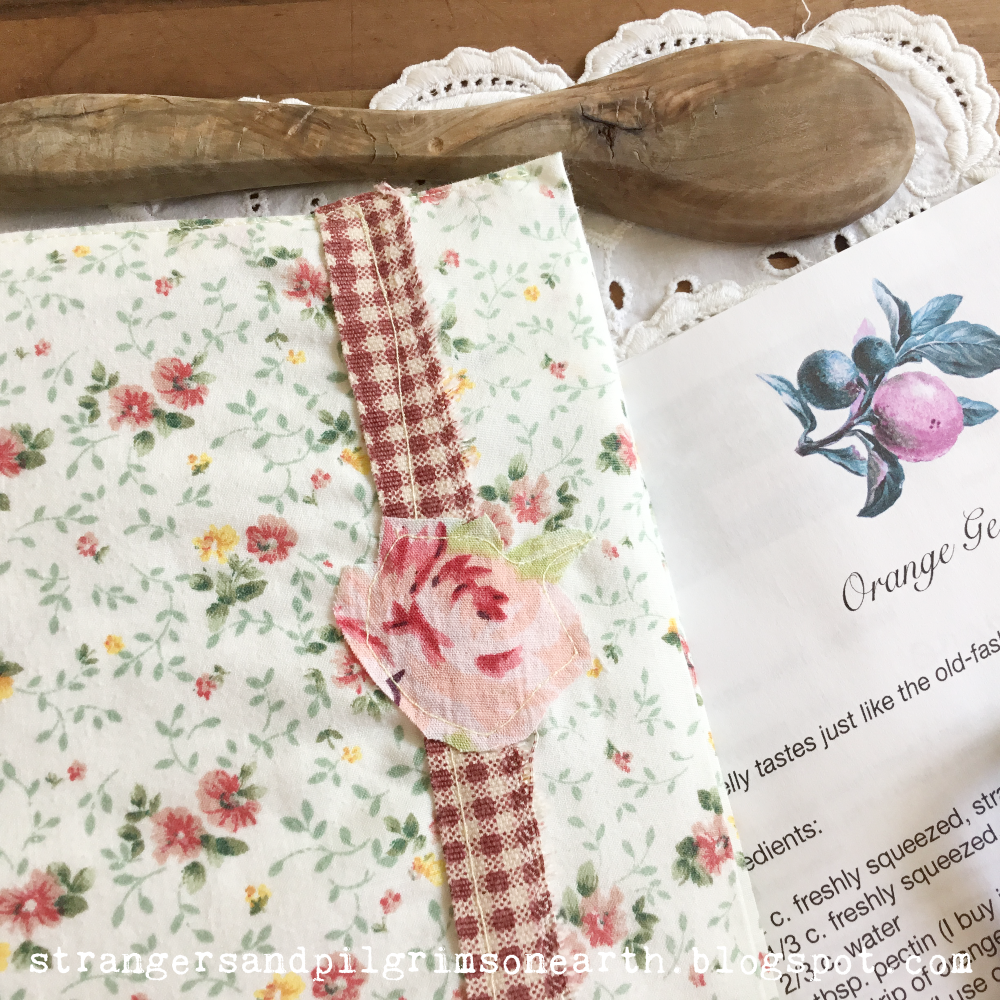
To add interest, I covered my notebook with a floral fabric to give it a cozy feeling. I am quite embarrassed to show this up close as I am not a great seamstress and quite an impatient one. I just used the remnant fabric from an old sheet (which had lots of piling but was still a cute print). I used the remnant gingham border from another project as ribbon (it still had a frayed side but I thought it added to the charm). Next, I cut off a rose from a retired duster-housedress and used that as a little embellishment. I also added a strip of lace to the back cover for more interest (pictured below).  I made the cover in the same way we used to have to cover our school books but used fabric instead of a paper bag. And I used a sewing machine instead of tape. It took 10 minutes to make because I obviously did it quickly (to be honest, I was supposed to be doing something else that day and I was feeling quite guilty for making this!).

I’ll be fine-tuning my binder over autumn as our garden has faded and I’ll have extra time to work on such projects. In fact, as I was typing this up, I thought I would add a food dehydration chart to this. I am always looking up the degrees and length of time for each piece of produce and it would be nice to have it handy here.

This project cost me a total of $3.76 because I had to purchase the alphabet tabs. Everything else was used from foraged materials around the house. This is a great way to use an old, ugly binder since you can cover it. Do you think you would ever make something like this? How do you store and keep track of your food preservation recipes? Is there anything else you would place in this binder? Please share!

Happy homemaking,

♡ JES


Saturday, February 26, 2022

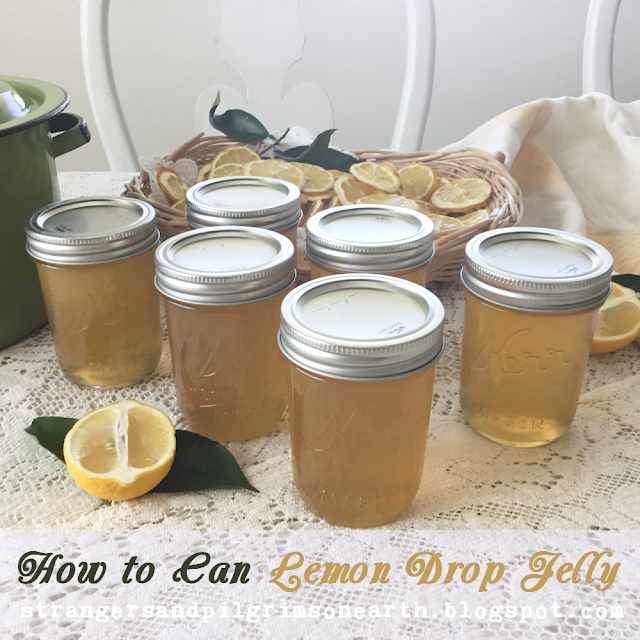
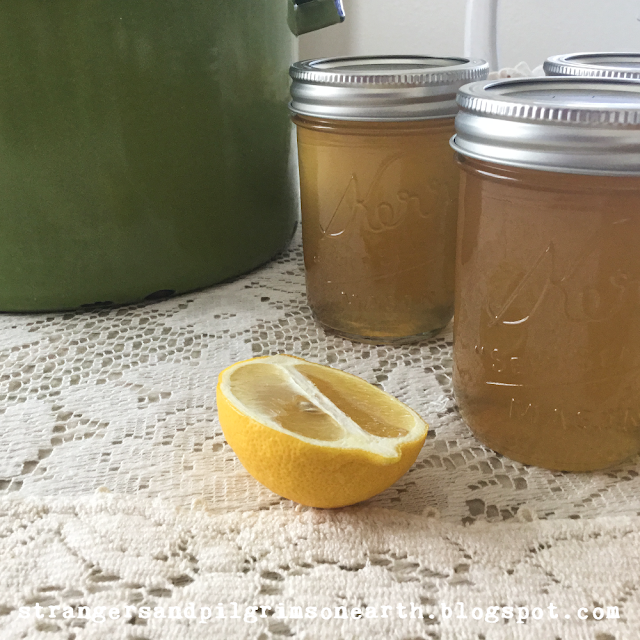
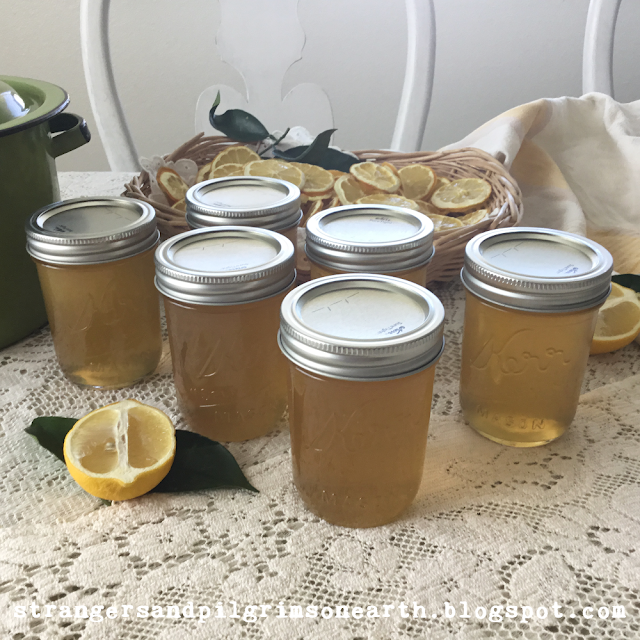
How to Can Lemon Drop Jelly ~ Easy Winter Preserving


"Fired with a with housewifely wish to see her storeroom stocked with homemade preserves, she undertook to put up her own currant jelly. John was requested to order home a dozen or so of little pots and an extra quantity of sugar, for their own currants were ripe and were to be attended to at once. As John firmly believed that 'my wife' was equal to anything, and took a natural pride in her skill, he resolved that she should be gratified, and their only crop of fruit laid by in a most pleasing form for winter use. Home came four dozen delightful little pots, half a barrel of sugar, and a small boy to pick the currants for her. With her pretty hair tucked into a little cap, arms bared to the elbow, and a checked apron which had a coquettish look in spite of the bib, the young housewife fell to work, feeling no doubts about her success, for hadn't she seen Hannah do it hundreds of times?"
~ Louisa May Alcott, Little Women

Jelly, where have you been all my life? I honestly don't know! With all the homegrown lemons I have preserved over the years, with all the time spent peeling and dicing those little lemon peels for marmalades, and here we have a product which requires much less work and has quite delightful taste and consistency and with so little effort!?! I have been making jam for so long, I never even thought of lemon jelly. I think it may also have happened because, as I perused my canning books, I noticed they really don't print recipes for citrus jellies. And since this is where my canning planning begins, I never thought to make them. That is too bad because it is such an easy and delicious way to preserve the prolific lemon in winter. Plus, you can do so much with those excess peels after!


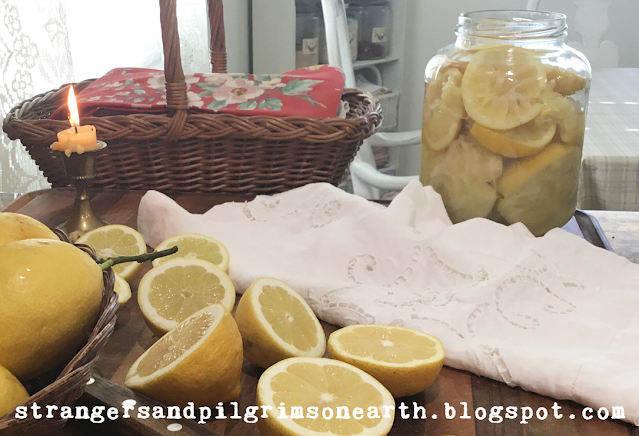
To begin, wash all your lemons and slice them in half. You will need approximately 8-12 lemons (depending on their size) for this little project. 


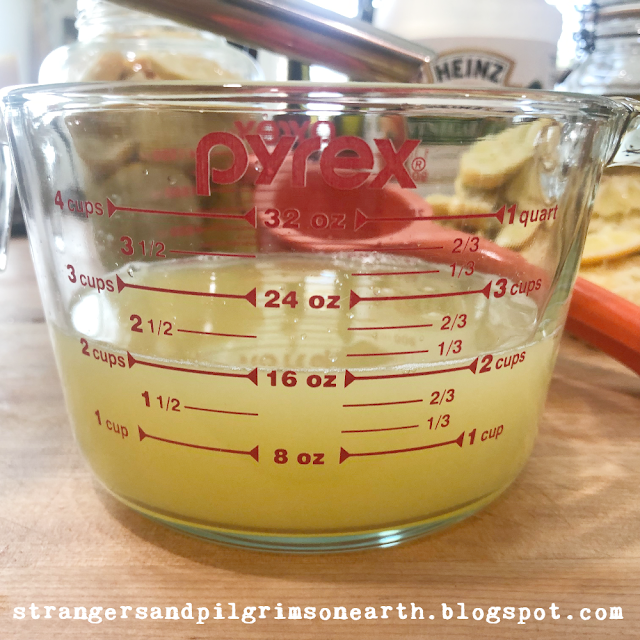
Squeeze and strain lemon juice until you have 2 cups.


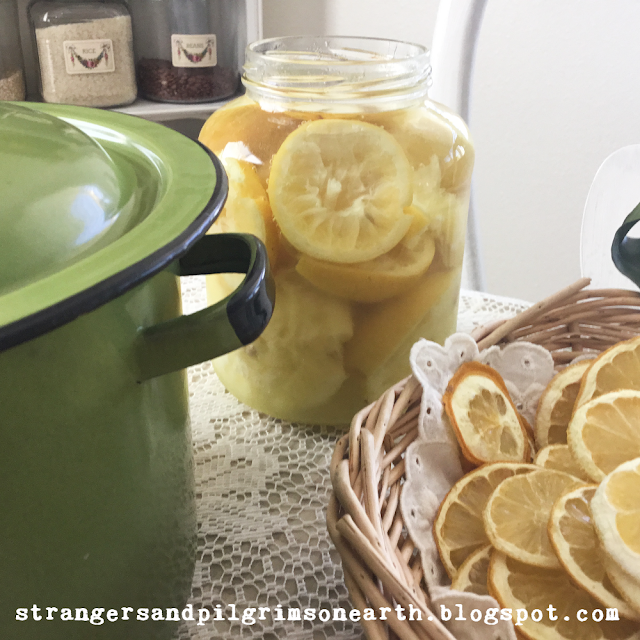
I placed my leftover lemon rinds in vinegar to infuse it for fabric softener, dishwasher rinse-aid and for a refreshing citrus cleaning solution. I also did some dehydrating of lemon slices that day but I do believe we were discussing jelly so I will continue on that... 


"The array of pots rather amazed her at first, but John was so fond of jelly, and the nice little jars would look so well on the top shelf, that Meg resolved to fill them all, and spent a long day picking, boiling, straining, and fussing over her jelly. She did her best, she asked advice of Mrs. Cornelius, she racked her brain to remember what Hannah did that she left undone, she reboiled, resugared, and restrained, but that dreadful stuff wouldn't 'jell'..."
~ Louisa May Alcott, Little Women

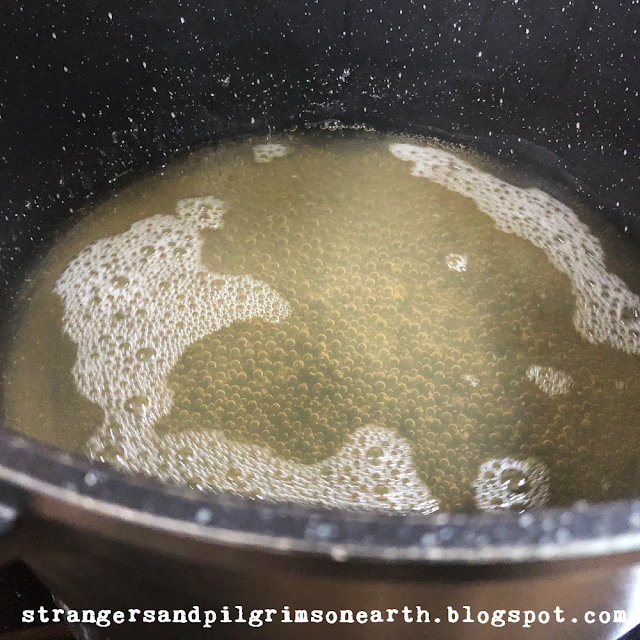
Place the strained lemon juice with two cups of water in a large cooking pot. Stir in the pectin (6 tbsp. or 1 box of Sure-Jell) until dissolved and bring to a boil (stirring frequently). Once liquid reaches a rolling boil, let it boil for one more minute (while stirring).

The pectin is what helps this jelly "jell". Perhaps poor Meg didn't use enough on that challenging day? I have found that if I buy the pectin in bulk (affiliate link), it is much more economical plus I am always prepared for an impromptu day of canning. It can be frustrating if someone bequeathes you with a free bag of ripe fruit and you don't have the supplies to preserve it. By the time you drop everything and get to the store, and then get distracted there with other items on your shopping list, oftentimes the feeling has passed and you don't have the same energy to can as before. Well, that is what happens to me at least... But with the bulk pectin, I am always prepared!


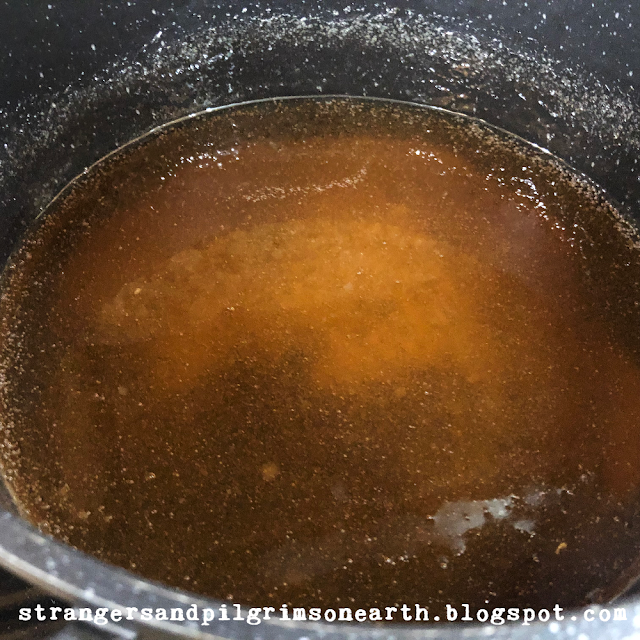
Next, stir in the sugar (4 cups) and bring to another rolling boil (stirring frequently). Once liquid reaches the rolling boil, let it boil for one minute longer while stirring constantly so it doesn’t overflow. When the time is up, remove the cooking pot from the heat.


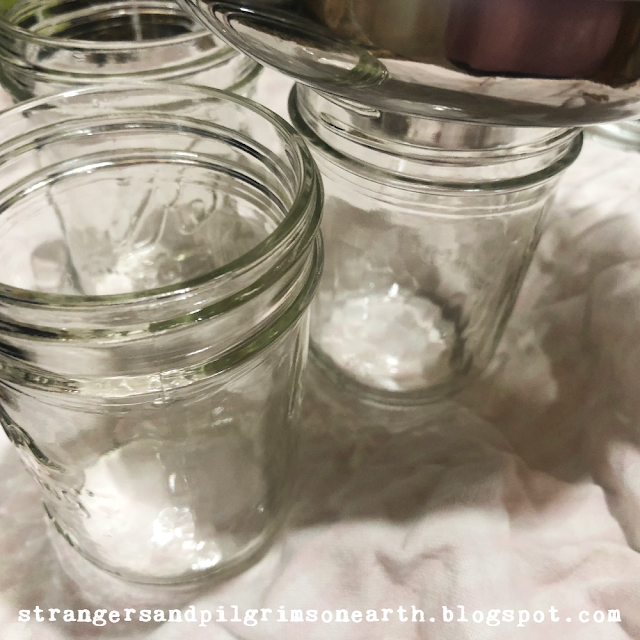
Next, skim off any foam and ladle the jelly into hot, sterilized half-pint jars leaving 1/4-inch headspace. 


Process for 5 minutes in a boiling water canner.


Remove jars and cool (out of the way of any drafts) on a kitchen towel when complete.

Yield: 6 half-pint jars

You will find the printable version of this recipe HERE 💛

Note: This recipe has been ADAPTED from the nice folks at the “Useful Knowledge” channel on YouTube. I have reduced the sugar a bit and included a water-bath processing time (I don't use the flip the jar method they share in their video). 


“But he did, oh, bless you, yes, hundreds of times, and so did Meg, both declaring that it was the sweetest jelly they ever made; for family peace was preserved in that little family jar.”
~ Louisa May Alcott, Little Women


I hope you have enjoyed this little tutorial and please do let me know if you give this jelly a go. It was such a simple canning project that adds a bit of sunshine into your winter pantry. And the aroma in the kitchen was absolutely refreshing and blissful!


Wednesday, February 23, 2022

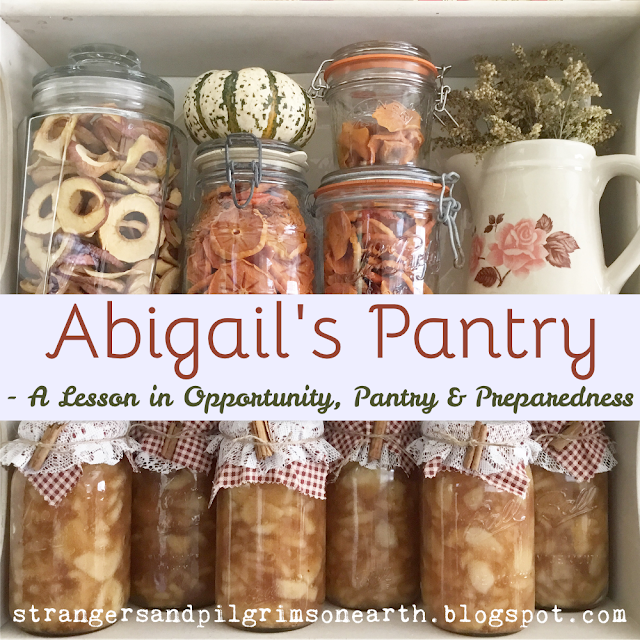
Abigail's Pantry ~ A Lesson in Opportunity, Pantry & Preparedness


“Then Abigail made haste and took two hundred loaves of bread, two skins of wine, five sheep already dressed, five seahs of roasted grain, one hundred clusters of raisins, and two hundred cakes of figs, and loaded them on donkeys…”
~ 1 Samuel 25:18


Building up our pantry affordably is one of my favorite homemaking hobbies and a responsibility I feel as keeper of the home. To make sure we have provisions through the thick and thin is a part of my job. The Proverbs 31 woman was prepared in her household, she did not fear for the future. Her skills and hardworking hands kept her family warm, well fed and comfortable. The wise Abigail of the Bible even used her extensive pantry provisions to save her household (1 Samuel 25:18)! Which brings me to my story...


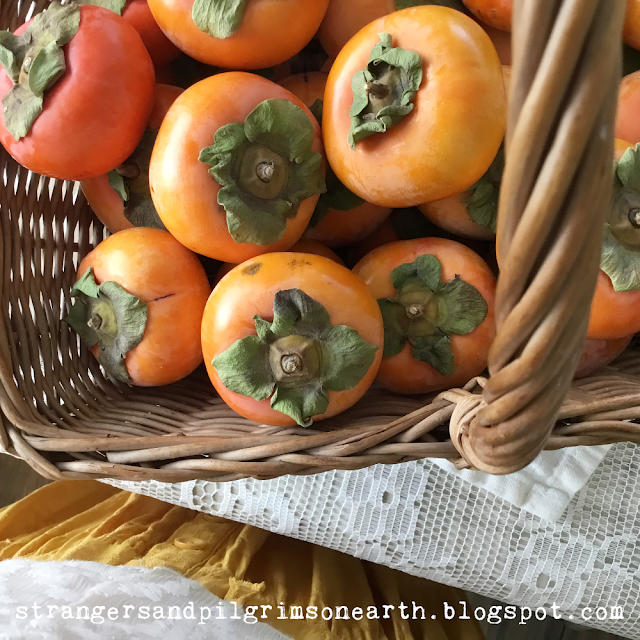
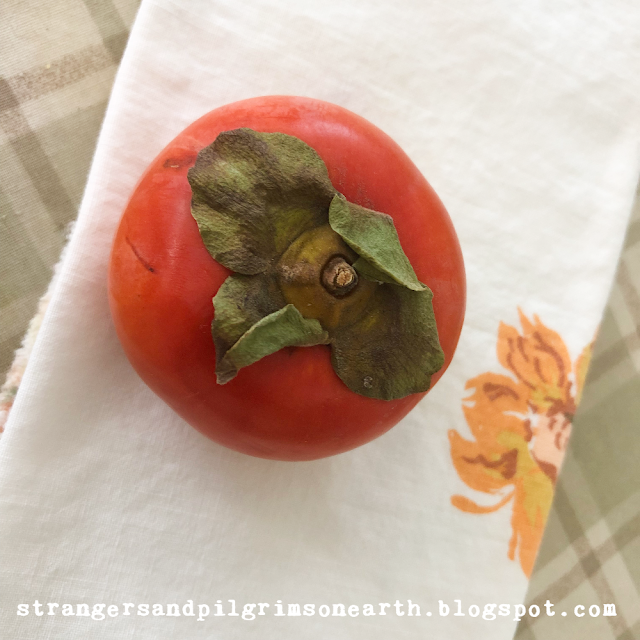
A few months ago, I had been processing apples to add to our pantry shelves when I received a call from my uncle offering me a bag of persimmons.

I politely declined as I was in "apple mode" at the time and was not much of a persimmon fan.

But the words that I have type many times before had haunted me, “waste not, want not.”


Here I had an opportunity to fill my pantry with free organic food and I turned it down because the timing wasn’t perfect and the fruit wasn’t a favorite! With the rising cost of food, filling the pantry inexpensively may become more challenging and everything should be viewed as an opportunity. Even the more unconventional foods should be creatively considered to meet the needs of your household.

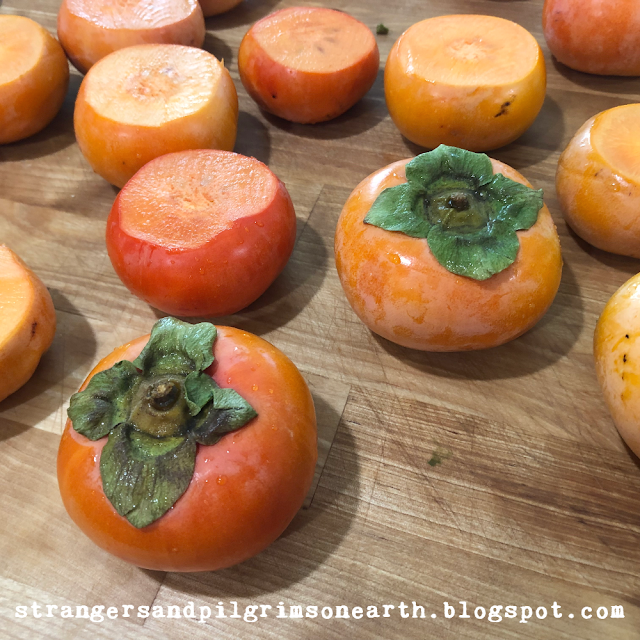
I quickly responded back with a change of heart and was surprisingly delighted when the persimmons arrived! They reminded me of the kind of fruit you would see illustrated in a Kate Greenaway book. They had a beautiful, bright orange color and the sweetest of green stems!

But, I almost missed them.


Sometimes opportunity presents itself at inconvenient times but this is where the housewife can glean from Ma Ingalls and turn blackbirds into pie!


“During their lifetimes, every man and woman will stumble across a great opportunity. Sadly, most of them will simply pick themselves up, dust themselves down and carry on as if nothing ever happened.” 
~ Winston S. Churchill

Though this example is small indeed, I don’t want to be one of those people!


“Thrift is poetic because it is creative;
waste is unpoetic because it is waste.” 
~ G.K. Chesterton

Being creative with what is seasonally available and multiplying our resources into various blessings is something I enjoy doing as keeper of the home. These items could easily have been discarded but instead have been useful additions to the pantry. Let’s ponder on a few examples of how the homemaker can be intentional with building her provisions frugally:

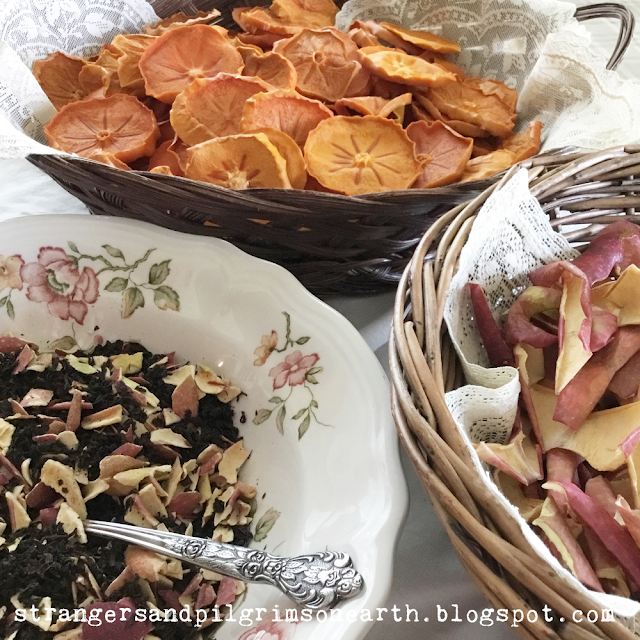
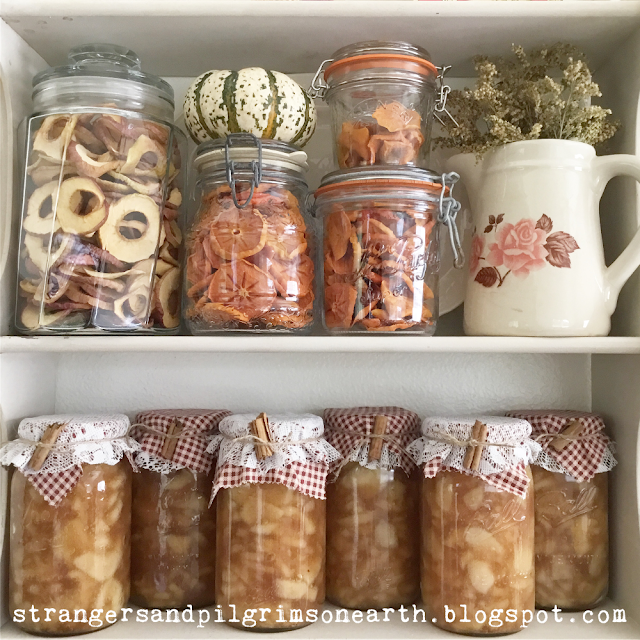
- apple peels leftover from my pie filling were dehydrated and crumbled and mixed with loose black tea to make a seasonal artisan tea blend. These are expensive to buy but simple to make and would be a lovely gift when wrapped attractively. Also, these peels are enhancing the nutrients of a simple pot of tea! Apple peel is an excellent source of fiber, it boasts vitamin C and antioxidants as well. Scientific research shows that apple peels also provide joint comfort and mobility along with supporting cardiovascular health. The peel of the apple has up to six times the amount of antioxidants compared to the flesh of an apple. So a frugal project is also a health building one as well!

- the remainder of the apple peels will be ground into a homemade fiber powder (yes, they are also very high in fiber!) for smoothies, added to cinnamon oatmeal and eaten as “chips” (more ideas utilizing fruit peels are found in our ebook- 100+ DIY Projects to Make with Fruit Scraps).


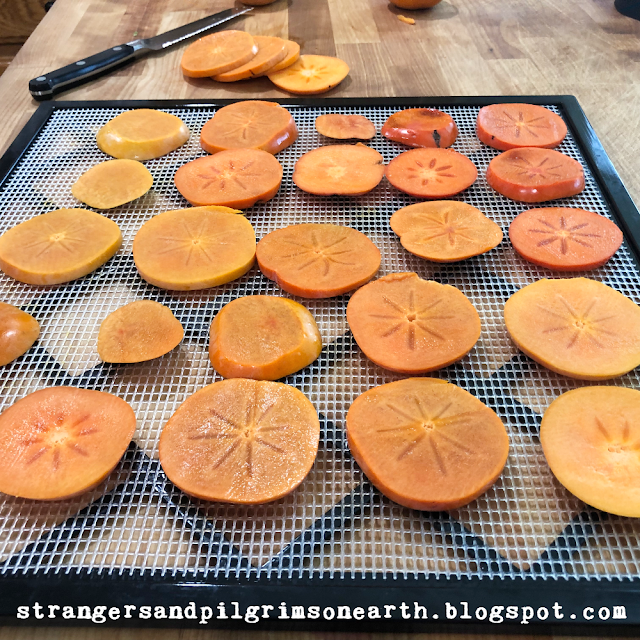
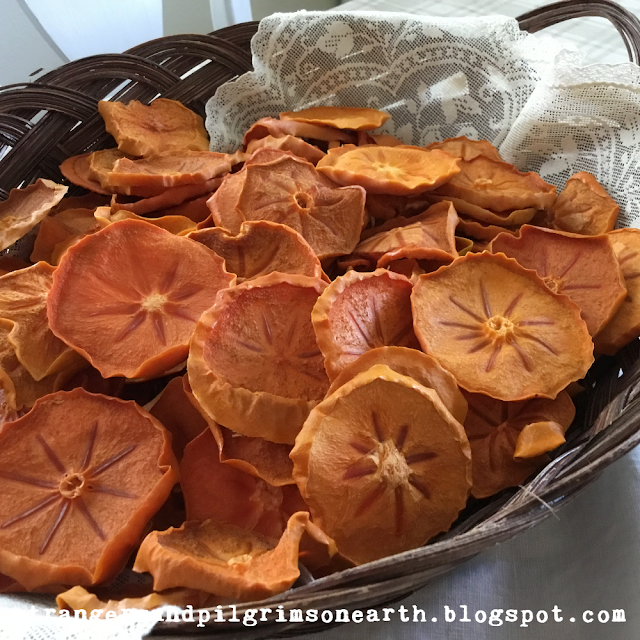
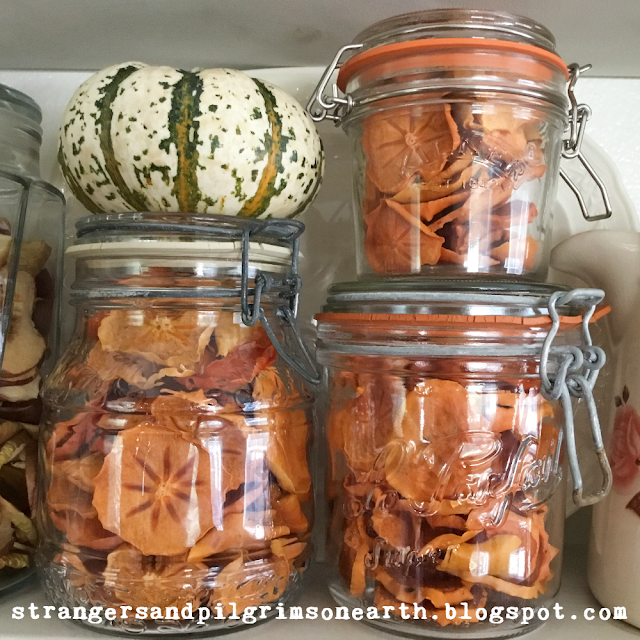
- a bag of free persimmons were almost left to rot under a backyard tree (and I almost let them 😞). Instead of being wasted, they have been sliced and dehydrated as a little treat for us (nature’s version of “candy corn”). We have found them to be absolutely delicious this way! I’ve also read that when thoroughly dried, they can be ground into a natural sugar! Though persimmons aren’t something I would normally buy, the gifted fruit has now been transformed into something we all enjoy. And of course, there is always persimmon bread and persimmon cookies to entice even the leeriest of eaters!


“Then Abigail made haste and took two hundred loaves of bread, two skins of wine, five sheep already dressed, five seahs of roasted grain, one hundred clusters of raisins, and two hundred cakes of figs, and loaded them on donkeys…”
~ 1 Samuel 25:18

As an additional lesson from Abigail, if we were to look at this one verse in the Bible, we can see the many homemaking skills that were involved to make this transaction happen (the transaction which saved her household!). To have the skills to do these things is preparedness in itself.

- There was the making of "bread" and the surplus of it (two hundred loaves!) for her large household. We are fortunate enough to have the ability to make large batches of bread and freeze it for the future!

- The "two skins of wine" can be compared to other fermented drinks the homemaker can easily make such as "apple scrap vinegar" and "kombucha". These both have a beautiful shelf life when properly stored and fermenting is one more skill we can add to our learning lists (not to mention the numerous health benefits of fermented food!).

- The "five sheep already dressed" could symbolize a farm setting with food at our fingertips, or for the city dweller, it can mean having a good surplus of meat in the freezer carefully chosen at times of discount. 

- The "roasted grain" can symbolize our ability to store many grains in bulk. It is a reminder to keep building up our pantry.

- The "one hundred clusters of raisins and two hundred cakes of figs" are clearly dehydrated foods. This is yet another item we can all learn to do and is so useful! You can often find dehydrators (this is the one I have and love - affiliate link) in thrift stores if you don't own one. As I age, I am finding I am loving the ease of this type of food preservation as it is quite simple! I like to dice up excess garden zucchini, peppers, tomatoes and any other soupy vegetable and have them all ready for autumn and winter menus. The drying of citrus slices is also a fun seasonal project with many uses!


And that is the beauty of a Proverbs 31-inspired homemaker, she turns trash into treasure. With her care and homemaking wisdom, she turns waste into wealth. With her vast array of skills, she turns everything in her path into a beautiful blessing!

It is a poetic life indeed, Mr. Chesterton.


Tuesday, August 24, 2021

A Call to Common Sense ~ Proverbs 31 Preparedness Series

“The time to repair the roof is when the sun is shining.” 
~ John F. Kennedy, State of the Union Address January 11, 1962


One thing about the Proverbs 31 woman that always inspired me was she did not fear for the future. The Good Book writes that “God does not give the spirit of fear”.

However, He does give wisdom. 

He gives the example of the ants that work hard and put away in due season. He gives the example of Noah to put aside provisions for a coming flood. He gives the story of Joseph to store food for a future famine.


And so, it is with a prudent spirit that I’m spending a little extra care this summer in building up our pantry and/or larder this year. I will be preserving with a purpose.

Common sense dictates that if half the world closes up commerce for over a year’s worth of time, there must be repercussions (right or am I crazy?!?!). 

I already notice little things missing on the shelves. And I’m honestly not sure what to expect. But I’m leaning on the Biblical side of preparedness and am slowly putting aside in a Proverbs 31 fashion.

I am making a real effort to dry any excess produce we grow and be extra mindful about waste! Any small bit of produce (Did someone say zucchini?) will be diced and dried and added to my "winter soup, sauce & stew" pantry. 

If there is a bumper crop of tomatoes, I’ll be diligent to preserve as much as possible.

If there is a good discount on oats (or anything else that is useful and stores long term), I’ll be purchasing two bags (instead of one). I will make certain to have an abundance of the three main preservation ingredients on hand; vinegar, sugar and salt (all of which don't technically expire).

If there’s a desire to buy something bright and shiny, I’ll hold off and make do with what I have. 


Another way I am "doing" this is collecting frugal and resourceful recipes and keeping them in my "Proverbs 31 Preparedness" Notebook. This doesn't cost any money and is a great little homemaking guide for hard times. I will include the pantry recipes I shared HERE (perhaps I will do a printable of these in the future) and any other concepts that allow you to make do with what you have. Of course, it will include all the crazy cake recipes which only uses pantry staples as well as:


You get the idea!


I'm also learning how to preserve everything that surrounds me in my environment. It is a little hobby I created for myself. It's called the pretend game... "pretend I have only what is grown on my property and my pantry as a resource for food". What can I make and serve as food for my family? So I look around my yard and find everything that is edible. I learn about my landscape. Dandelions in the spring! These are free and can be made into jelly, fried up into fritters and brewed into tea (they also boast many health properties). I also look at my beautiful roses and see food there! The hips can be dried for vitamin C-rich teas. The petals can be brewed for a relaxing tea and you can make "rose jelly" (which can be served with biscuits made from pantry ingredients). All the culinary herbs can be dried for food but can also be made into jelly. They can top a pizza (all the crust ingredients are pantry staples) to make it more nutritious. I think you get the point. Be aware of your surroundings, what can feed you and how to prepare the various foods. This is just a side little hobby I have been doing and it is quite fun to add this useful information to my "Proverbs 31 Preparedness" Notebook as well.


Here are a few recipes to make "floral and herb" jelly with anything edible in your yard. All that is required is sugar (pantry staple) and a supply of pectin (I bought mine in bulk - -affiliate link) as it is less expensive that way plus it enables me a nice supply for any spontaneous project). HERE is another recipe which uses the basics of herbs, water and sugar.  I have made rose jelly and dandelion jelly and they were both quite delicious.


In conclusion, this is no different from what our pioneering ancestors did to survive each season as they never knew what the weather would bring. I foresee a bit of a storm coming so I’m quietly continuing in the old ways of canning, drying, pickling, fermenting, repurposing, thrifting and saving. However, not out of a rushed panic or fear, but slowly, gently, calmly and with a “sound mind”.

(And if I'm wrong, I will have an amazingly stocked pantry and I will have acquired more forage and food preservation knowledge (always a good thing). With all the savings, I can purchase that apothecary cabinet that I've been eyeing! 😉 )


"The wise store up choice food and olive oil..."
~ Proverbs 21:20a

"The prudent see danger and take refuge, but the simple keep going and pay the penalty."
~ Proverbs 22:3

“It is not often that a man can make opportunities for himself. But he can put himself in such shape that when or if the opportunities come he is ready.”
~ Theodore Roosevelt

"Strength and dignity are her clothing, and she laughs at the time to come."
~ Proverbs 31:25

“For God has not given us a spirit of fear, but of power and of love and of a sound mind.”
~ 2 Timothy 1:7

To begin your own Proverbs 31 Preparedness Binder, here is a printable cover page.  I've be placing much of my information in this binder for any "time to come" and can pass this down to my daughter one day as a beautiful resource. In the meantime, here are the preparedness articles we have shared thus far to get you inspired to continue adding to your Proverbs 31 Preparedness notebook: 

🍅 🧺 ♥️

What are your thoughts on this? I’m so curious! There are many "ordinary" homemakers like ourselves who feel this importance and are sharing their ideas and experiences that you may also appreciate such as Annabel at The Bluebirds are Nesting and Patsy at A Working Pantry. I also glean much from The Prudent Homemaker and the Preparedness Mama (though her blog is solely preparedness tips).