Pages
Tuesday, December 5, 2023
We are Sunshine-Makers
Thursday, January 5, 2023
Preserving Orange Gem Jelly, Discards and Delighting in the Light
I love to work with citrus in the winter. Not only is it tasty and refreshing and full of the necessary vitamin C, but bright and beautiful in the somber chilly background of the season. Preserving food in jars is also very welcoming in this weather as the warmth canning brings into the kitchen is much appreciated. Plus, adding extra jars to the pantry shelf is indeed lovely too. Would you care to join me in preserving some delicious orange gem jelly? As the name suggests, it is reminiscent of those "Sunkist" sugared orange gem candies I loved as a child. Plus, it is quite simple to make.
- 2 c. freshly squeezed, strained orange juice (from approx. 5-6 oranges)
- 1/3 c. freshly squeezed, strained lemon juice (from approx. 2 lemons)
- 2/3 c. water
- 6 tbsp. pectin (I buy it in bulk HERE or 1 box of Sure Jell)
- long strip of orange peel (from oranges used above)
- 3 c. sugar (I use organic from Costco)
Note: This recipe has been adapted from the “National Center for Food Preservation” website.
I think the joy one gets from reading these pioneering classics is the ability to see the beauty in the ordinary. While the darkness seems to be looming in so many areas of life, these books (and Scripture - read Phil 4:8) remind us to glorify in the basic but beautiful blessings. To enjoy the heavenly gifts...
Sunshine, the chirping of the birds, the early luscious spring growth and the aroma of wet earth, the cozy kitchen with the curtains flowing in the breeze, the smell of a newborn child, the smile from a toddler, the embrace from a child, the laughter shared with a teen, the steadfastness of a husband’s love, the eternal promises from Above.
Dearest reader, though it is winter, let us remember to delight in the Light.
I hope you enjoyed today's winter preservation post with a touch of simple pioneer nostalgia. It is raining this morning and the sound of the pitter-patter is so gentle and soothing. I'm looking forward to beginning my nesting for the day. Happy homemaking! Love, JES
Monday, December 19, 2022
The "Art" of Home-Making Mondays ~ Inspiration #13
Friday, November 18, 2022
Love Languages in the Home, DIY Pumpkin Pie Spice and Desserts
Love languages in the home…
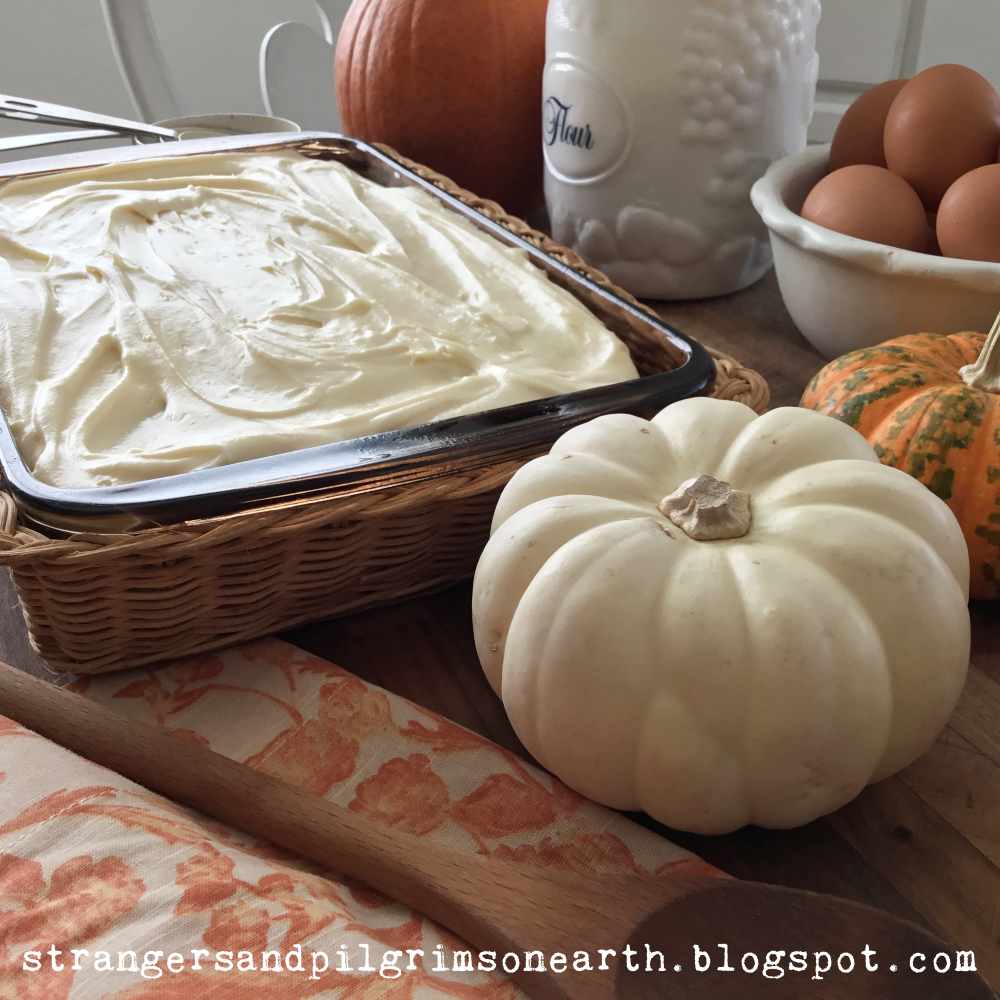
- freshly baked desserts
- coziness (throw blankets!)
- a welcoming smile
- freshly picked flowers or greenery
- diffusers running
- tidiness
- a gentle squeeze
- meals together
- candlelight
- folded laundry piles
- pie (savory and sweet)
- a bedtime story
- prayers
- hugs
- encouragement
- your undivided attention 📵

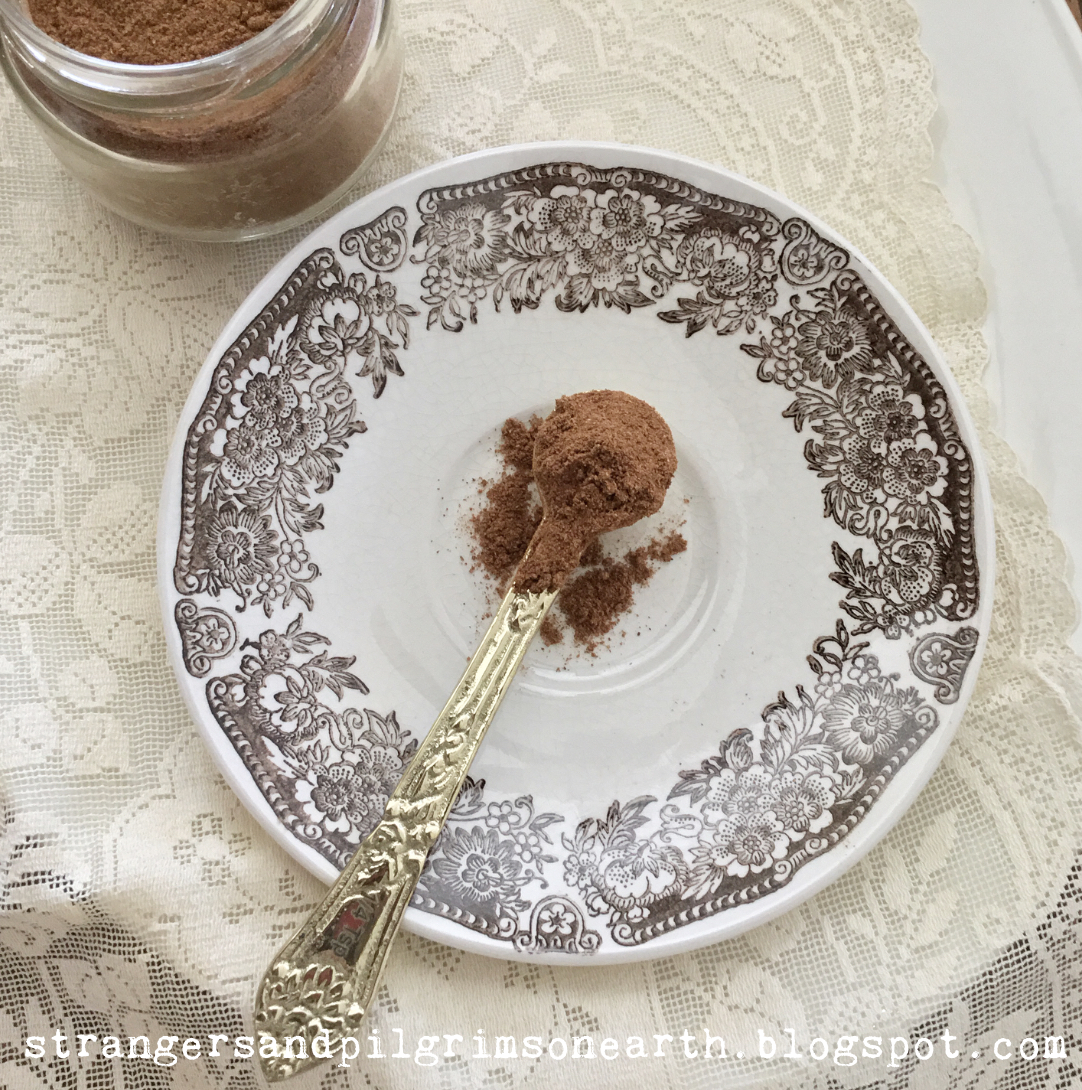
— 1/4 c. ground ginger
— 2 tbsp. nutmeg
— 2 tbsp. ground cloves
Stir ingredients together until combined.
Yield: approx. 1 cup


Thursday, October 6, 2022
A "Real Life" ~ Snippets
Friday, September 16, 2022
How to Make a "Homespun" Preserving Notebook
I used to keep my canning recipes in my recipe book but the more recipes I accumulated, the less space I had for the seasonal canning ones. Then I switched them to my herbal but that also grew in size. This summer, I began gathering all my canning notes, recipes, etc., and placing them in their own dedicated binder. I call it my "Preserving Notebook".
After much deliberation (yes I think hard on such things 🤓), I decided to use alphabet tabs (affiliate link) to organize everything. That way, any canning recipe would have a home alphabetically. Apple recipes would go under “A”, blueberry recipes under "B", strawberry recipes under “S” and so forth. I also inserted a few other things that are useful to my preserving needs.
Here is what I included in my notebook:
(These first few items I keep in the beginning of the binder, prior to the tabs since they don't fit a certain "produce" theme. I consider them informational.)
- my food preservation planner pages (free printable here) In the autumn and winter months, as I go through my canning books, I make note on the recipes I would like to try. I input the recipe, book and page number in my planner pages. That way, when the season hits, I already know what I want to make with a certain fruit or vegetable. It is very useful.
- pressure canning instructions (I don’t do it enough to rely on my memory so these steps are helpful and always conveniently located) I keep these at the front of the index tabs and have it covered in plastic as I take these in and out more. I copied these directions from The Prairie Homestead where she gives a great in-depth tutorial on how to use a pressure canner. Here is the link in case you are interested.
- pressure canning vegetable and meat charts (with time and pressure amounts) These I photocopied from the pressure canner manual (not shown).
- preserving articles I read from the canning authorities and find useful (such as “how to can without sugar or salt”, etc.) Here is the link in case you are interested in this particular one.
- photocopies of my favorite recipes from my canning books (this way I don’t have to search them out), any handwritten recipes and so forth. Of course, these are placed alphabetically by "produce".
- themed recipe articles from State extension offices (they’ll have printable pages on how to preserve foraged fruits, etc., and list various preserving ideas and recipes which are very handy - here is a sample of the foraged fruit and here is the how to preserve peppers booklet that I included as well)
- individual preserving recipes I print from websites (once again these are placed in alphabetical order according to what is being preserved) Here is the apple pie filling recipe I use. I did do some fall decorating on the page as it was a little bland :)
- fruit leather recipe (here is the one I printed out from Chocolate Box Cottage) Something like this I would file under "F" for "fruit" in general.
- any food preservation recipes in general (including freezer jam recipes, fermenting recipes, dehydrating, etc.) Here are a few from my blog which may be printed for your notebook:
- citrus fruit preserving ideas (this would be helpful to fill up your planner pages with ideas)
- fruit scrap jelly (here is a recipe sheet so you can record this vert versatile, frugal recipe)
- lemon drop jelly
- lemon juice
- lemon scrap syrup
- strawberry freezer jam
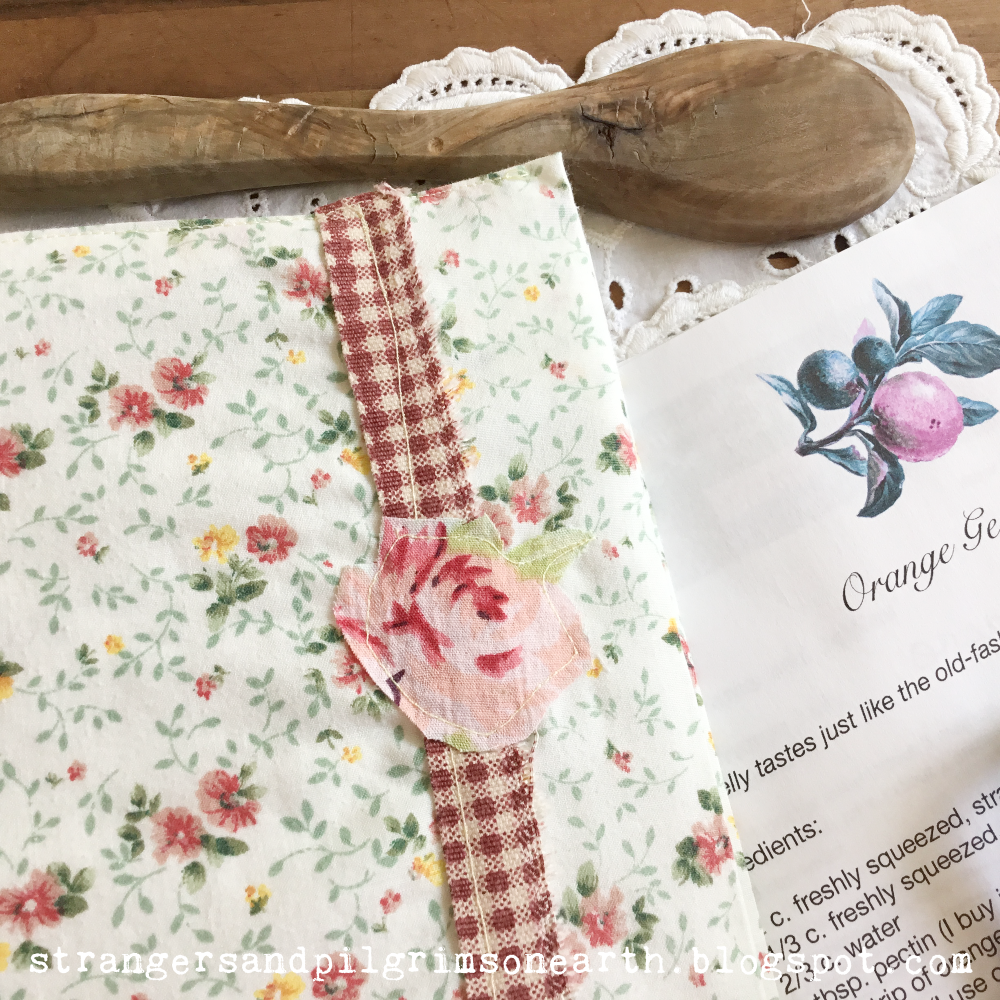
To add interest, I covered my notebook with a floral fabric to give it a cozy feeling. I am quite embarrassed to show this up close as I am not a great seamstress and quite an impatient one. I just used the remnant fabric from an old sheet (which had lots of piling but was still a cute print). I used the remnant gingham border from another project as ribbon (it still had a frayed side but I thought it added to the charm). Next, I cut off a rose from a retired duster-housedress and used that as a little embellishment. I also added a strip of lace to the back cover for more interest (pictured below). I made the cover in the same way we used to have to cover our school books but used fabric instead of a paper bag. And I used a sewing machine instead of tape. It took 10 minutes to make because I obviously did it quickly (to be honest, I was supposed to be doing something else that day and I was feeling quite guilty for making this!).
I’ll be fine-tuning my binder over autumn as our garden has faded and I’ll have extra time to work on such projects. In fact, as I was typing this up, I thought I would add a food dehydration chart to this. I am always looking up the degrees and length of time for each piece of produce and it would be nice to have it handy here.
This project cost me a total of $3.76 because I had to purchase the alphabet tabs. Everything else was used from foraged materials around the house. This is a great way to use an old, ugly binder since you can cover it. Do you think you would ever make something like this? How do you store and keep track of your food preservation recipes? Is there anything else you would place in this binder? Please share!
Happy homemaking,
♡ JES
Monday, September 12, 2022
Lavender Laundry Soap ~ Herbal Homemaking ~ Printable Recipe
It is okay to enjoy your life at home. It is okay to collect large, old jars because you think they’re pretty. It’s okay to decide to fill those jars with homemade sundries to add loveliness to your routine. It’s okay to want to beautify the ordinary to make it extraordinary. It’s okay to pour love, creativity and joy into your tasks. It’s okay to pour your heart into all areas of your home.
You have permission to ignore everyone who tells you housework is mundane. It’s okay to make homemaking fun! As Mark Twain put it, “Find a job you enjoy doing, and you will never have to work a day in your life.”
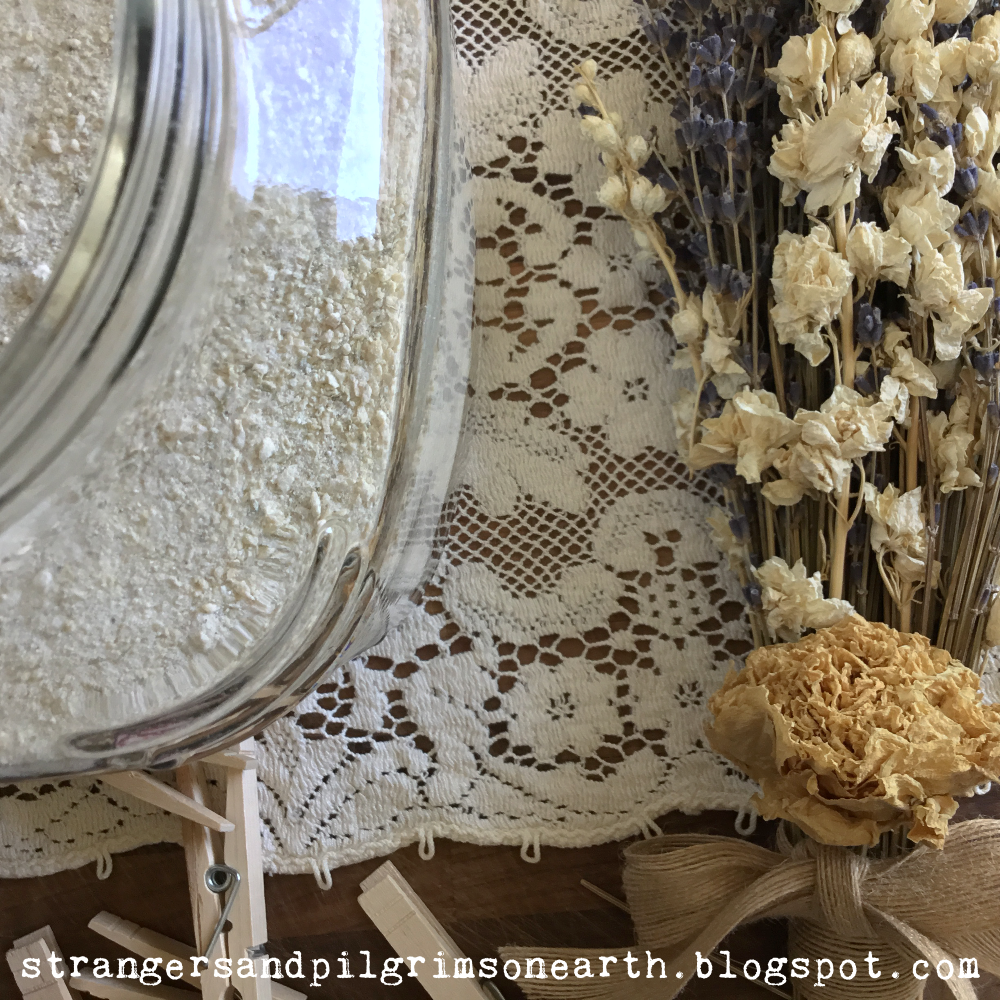
Lavender Laundry Soap (a perfect recipe of loveliness):
-- 1 c. grated bar soap *
-- 1 c. borax (found in laundry isle at Walmart)
-- 1 c. washing soda (found in laundry isle at Walmart)
-- 1/4 c. lavender buds
Optional: 10 drops lemon essential oil or your favorite (I use lemon as it is cleansing and the least expensive of all the oils!)
Pulverize ingredients in a blender or food processor until powdery.
* I used a plain coconut oil soap (which I found on my travels - it has no extra oils or fats in it and is therefore better suited for laundry) but you can also use Dr. Bronner’s bar soap and/or Kirk’s Castile Soap if you desire something natural. Calico and Twine sells a lovely laundry soap in her shop (which is also natural and made with coconut oil). I know many people use Fels Naphtha soap, Zote soap or even plain Ivory bar soap.
There are a myriad of recipes online you can experiment with. I’m sharing a basic recipe but with the addition of dried lavender to make it special. I have extra in my apothecary that I want to use up before it loses its potency. As lavender means “to wash”, what better herb to enjoy for our laundry?
Use 1 tbsp. for regular loads, 2 for larger loads. As it is low in suds, this recipe should be fine for HE machines. Just make sure all the lavender is pulverized!